Colombia is a great country to travel independently, but a little preparation makes your trip much easier. Check the current safety situation, entry requirements and vaccinations before you leave, and think about money, transport and mobile data. I traveled through Colombia for four weeks using buses, domestic flights, taxis, boats, horses and a lot of walking. These travel tips Colombia are based on that trip, with the practical information updated for traveling now.
Is Colombia safe to travel?
Safety was the main question people asked me before I went to Colombia, especially because I was traveling alone as a woman. During my four weeks in Colombia, I didn’t experience an unsafe moment. Of course, I traveled consciously. I watched my belongings on buses, didn’t walk around showing valuables and asked at my hotel where I could safely walk in the evening. Colombia is a big country and the situation can differ by region, so always check the latest travel advice for the places on your route. Natural conditions can affect your trip too. Earthquakes occur in Colombia, while heavy rain can cause landslides, road closures and delays in mountain areas. Travel insurance is important as well, especially because official travel warnings can sometimes affect your coverage.

Check the exact regions on your route, not only Colombia as a country. Read my separate guide about whether Colombia is safe to travel for more of my experience and safety tips.
Visa and entry requirements for Colombia
Visa rules depend on your passport. Travelers from many European countries, the United States, Canada and Australia can currently visit Colombia for a short tourist stay without applying for a visa in advance, but always check the official rules for your nationality. When I arrived in Bogotá, I waited more than an hour before I finally got through immigration. Colombia also uses the Check-Mig system, where you can enter your travel information before arrival or departure.
Check your passport requirements, visa situation and whether you need proof of onward travel shortly before you fly. Entry rules can change.
Vaccinations, health and altitude
What you need depends on your route. Bogotá high in the Andes is very different from traveling through tropical lowlands or more remote areas. Yellow fever is one vaccination to check carefully, especially if you plan to visit higher risk areas. Malaria advice also depends on where you travel, so show your complete itinerary to an official travel health organization in your own country. Bogotá is located at around 2,600 meters above sea level. Take your first day a little easier if you feel the altitude, drink enough water and give your body some time to adjust.
Arrange your travel health advice several weeks before departure.
Weather in Colombia and what to pack
There isn’t one Colombian climate. During one trip you can go from cooler Bogotá to the green mountains around Salento and finish in tropical heat on the Caribbean coast. Bring layers. A sweater or light jacket is useful in Bogotá and on cold air-conditioned buses, while Cartagena and Palomino call for light clothes. A light rain jacket is useful in the greener mountain areas too. Rain can also slow down road travel through the Andes, another reason not to plan every connection too tightly.
Money in Colombia
The Colombian Peso, COP, is the local currency. I used ATMs during my trip and could pay by credit card in many hotels, even with American Express in several places. Still, carry some cash. When I traveled to Palomino, getting money was much more difficult, so I arrived prepared. Before heading somewhere smaller or more remote, ask your accommodation or locals whether there is a reliable ATM. I also keep some USD separately as emergency cash. Colombia felt affordable compared with Europe, although there is obviously a big difference between taking a local bus and staying in a boutique hotel in Cartagena.
Traveling around Colombia by bus
Local and long distance buses were an important part of my Colombia trip. They were comfortable and affordable, but the air conditioning could be freezing. Bring a warm sweater in your hand luggage even when it is hot outside. Don’t underestimate travel times. The Andes run through the country and I spent plenty of hours on winding mountain roads. Traffic jams, road blocks and some enthusiastic overtaking were all part of the journey. If you get carsick easily, prepare for those curves. You can check bus and transfer options through 12Go when comparing routes.

Domestic flights in Colombia
For longer distances, flying can save an entire travel day. I used domestic flights several times and would book ahead if you want a good choice of departure times. One time I accidentally booked a flexible ticket that turned out to be business class. I had no idea until I ended up in a very comfortable seat at the front. Sometimes a booking mistake works in your favor. You can compare domestic flights through Expedia.
Do you need a rental car in Colombia?
I didn’t rent a car in Colombia. Buses, flights and taxis worked perfectly well for my route. A car can be useful if you want to explore rural areas or smaller towns at your own pace, but mountain roads can be slow and driving in the larger cities wouldn’t be my first choice. Compare options with Discover Cars before deciding.
Taxis and getting around cities
I used Uber for the first time in Bogotá and loved how easy it made getting around. I could see my route and didn’t need to arrange cash with the driver. Apps and local transport options can change, so ask your hotel which service works best in the city you are visiting. At airports, I prefer to arrange transport beforehand or use an official service.

Mobile data and an eSIM in Colombia
Having mobile data is extremely useful when traveling independently in Colombia. You can check your route, contact your hotel and arrange transport without depending on Wi-Fi. Airalo lets you install an eSIM before you leave, so you can have data shortly after arriving in Colombia. New Airalo users can use code NEWTOAIRALO15 for 15% off their first eSIM.
Install your eSIM at home while you have reliable Wi-Fi and check the activation instructions before switching it on.
Download offline maps
Before leaving for Colombia, I downloaded Maps.me and saved the areas I planned to visit. That turned out to be very useful. I used the offline maps while walking through cities and during my hike around Salento and the Cocora Valley, where reception wasn’t always available. Even with an eSIM, I still recommend having an offline map on your phone.
Booking hotels in Colombia
Location matters, especially when you’re traveling alone. I prefer staying somewhere that allows me to walk to restaurants and sights without worrying too much about getting back in the evening. Use Booking.com or Expedia to compare hotels, but check recent reviews and the neighborhood as well as the room. In cities such as Bogotá and Medellín, where you stay can make a big difference to your experience.
Other useful tips for Colombia
A little Spanish helps a lot! You don’t have to speak perfectly, but ordering food, asking for directions and talking to drivers becomes much easier. It also makes contact with local people more fun.
Keep some flexibility in your route. Buses can be delayed, weather can change plans and journeys can take longer than expected. An extra hour between connections is rarely a bad idea in Colombia. And sometimes transport becomes part of the experience itself.
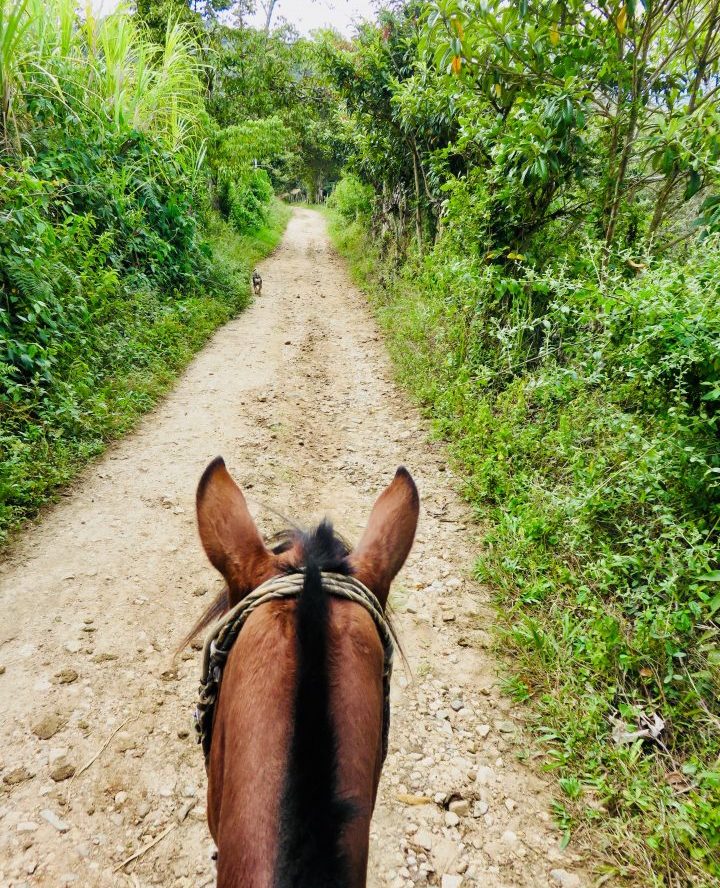
In rural areas and on some tours you can even continue by horse, which I did during my travels. And walking is the best way to explore the surroundings!
Let Me Inspire You takeaways
Colombia doesn’t need weeks of complicated preparation. Check the safety situation and entry requirements for your route, arrange your health advice, make sure you can access money and download the maps you need. Then go and enjoy the trip. During four weeks in Colombia I traveled through busy cities, coffee country, mountain landscapes and the Caribbean coast, and most of the practical things were easier than I expected.
Continue planning your Colombia
Want to start planning your route? Continue with my 3 to 4 week Colombia itinerary and use the route that worked for me as a starting point. From there you can continue to my blogs about Bogotá, San Agustín, Cali, Salento, Medellín, Palomino, Barranquilla and Cartagena.