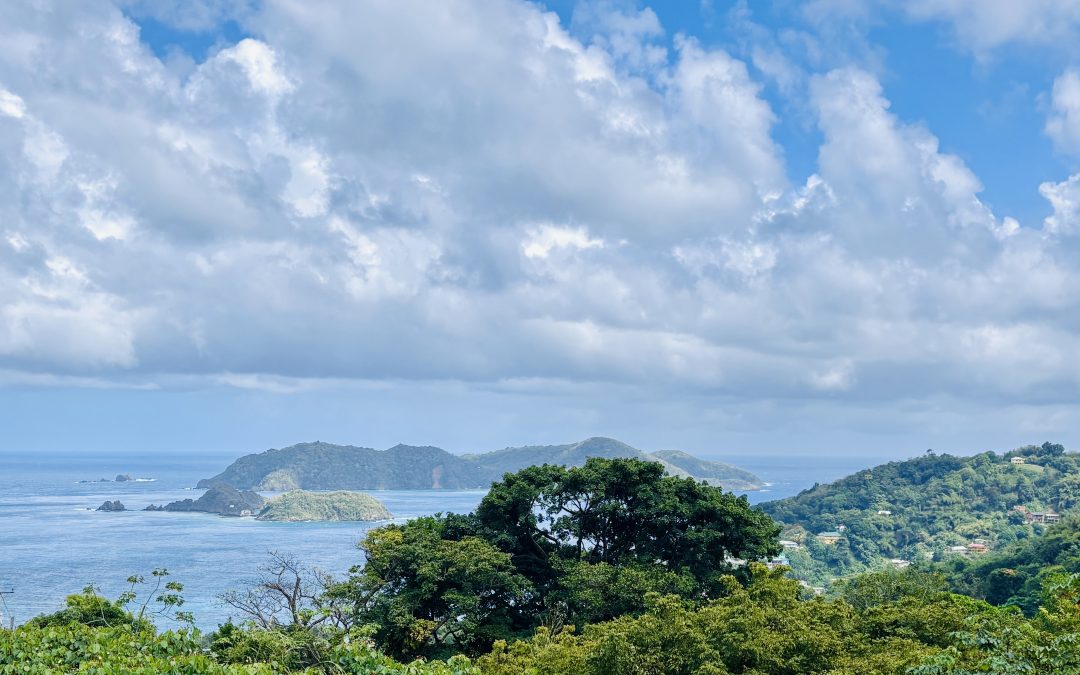
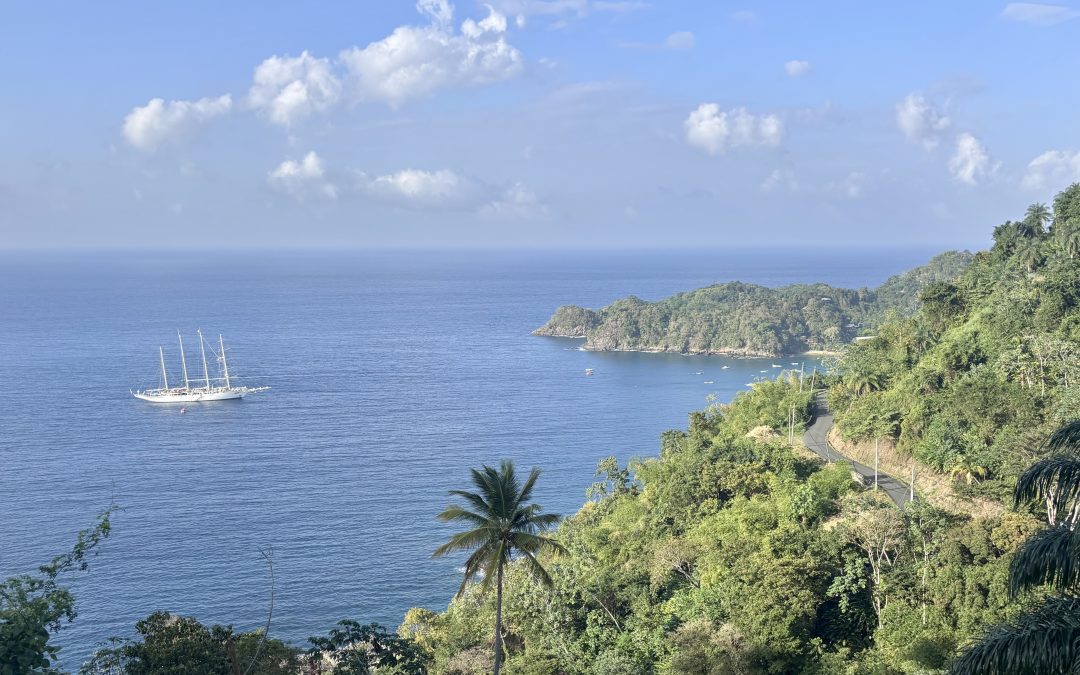
After traveling through Suriname and Guyana, Tobago was the beach part of my trip. And there are plenty of beaches to choose from. Tobago beaches are also not all the same. Around Crown Point you get clear turquoise water and easy beach days, while farther around the island they become quieter, greener and sometimes much wilder. My trip started in Crown Point without a car, with Swallows Beach and Store Bay both within walking distance. After picking up a rental car, I continued farther around Tobago, using Castara as my base for several nights. Englishman’s Bay was my favorite, Pigeon Point had the most beautiful Caribbean colors and Castara was the beach I kept coming back to.
My Tobago beach route
Swallows Beach → Store Bay → Pigeon Point → Mount Irvine → Castara → Englishman’s Bay → Parlatuvier → King’s Bay → Speyside → Charlotteville → Bloody Bay → Castara → Pigeon Point
This route takes you past some of the best beaches in Tobago, but also smaller local beaches and bays that are easy to stop at along the way. Start around Crown Point without a car. Swallows Beach and Store Bay are both easy to reach on foot if you stay nearby. Once you want to see more of the island, rent a car. It gives you the freedom to stop at smaller bays and viewpoints and stay longer somewhere if you like it.
Do not try to visit all these beaches in one day. Start around Crown Point, use Castara as a base and take your time exploring the north and east of Tobago.
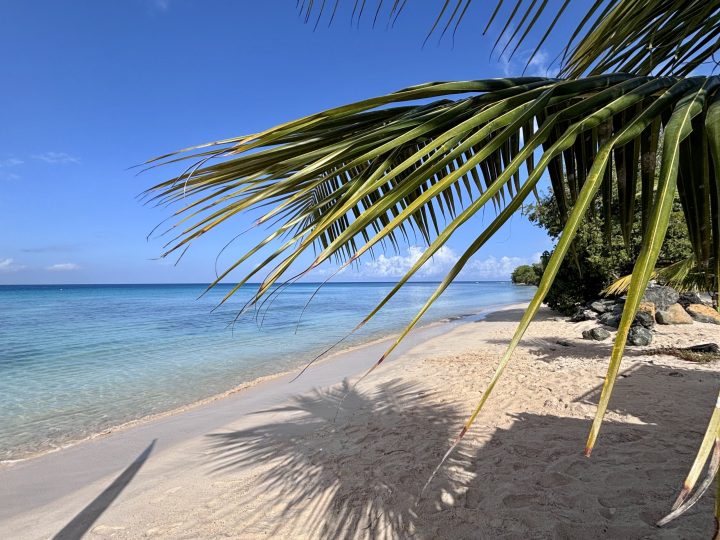
Swallows Beach: an easy first beach from Crown Point
Swallows Beach makes an easy first beach stop from Crown Point. It is a nice beach with clear water and a relaxed atmosphere, and when I visited it felt much more local than touristy. Stop for a swim or stay for a while if you are already around Crown Point. If you are staying around Crown Point, there is really no need for a car yet. Between Swallows Beach and Store Bay you also find Coco Reef Resort, with its own private sheltered beach. You cannot simply use it as a public beach, but it shows how close all these small beaches are around Crown Point.
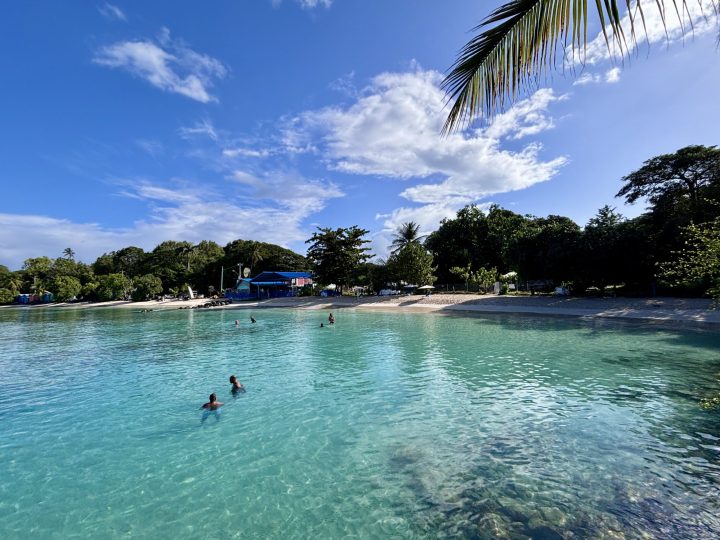
Store Bay: a touristy beach with food stalls
Store Bay has much more of a touristy feel. The beach is not very big, but you can rent sun chairs if you want. Just behind the beach you find small food stalls serving local dishes, together with a few souvenir shops. Combine a swim with lunch and try some local Tobago food while you are here. Store Bay is also close to Crown Point and the airport, so it is an easy stop at the beginning or end of your trip.
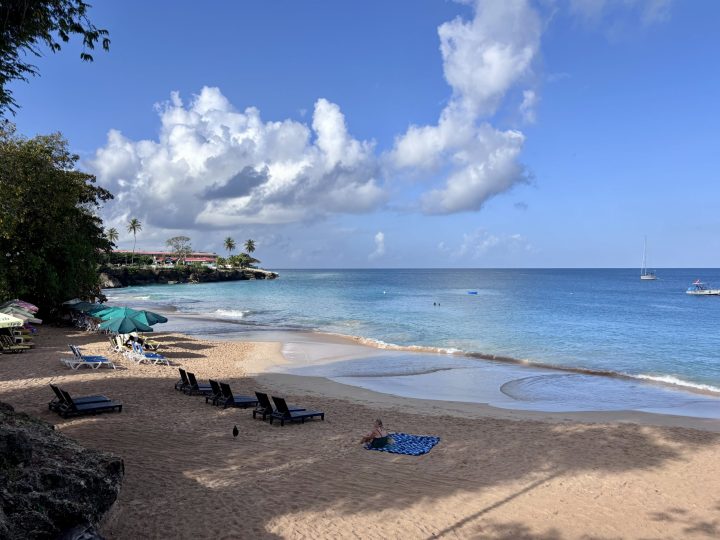
Pigeon Point Beach: turquoise water and water-sports
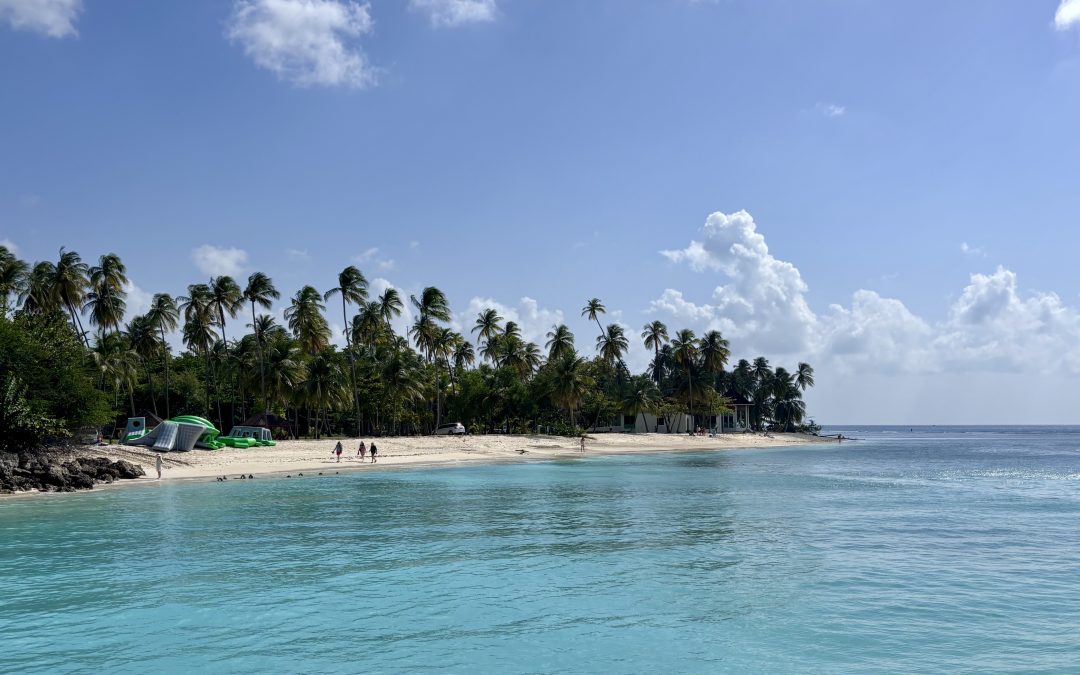
After picking up my rental car, Pigeon Point was one of the first stops. This is the one of the Tobago beaches you probably already know from photos: white sand, palm trees, turquoise water and the wooden jetty. It is more organized and definitely busier than most beaches farther around the island, but the water really is beautiful.
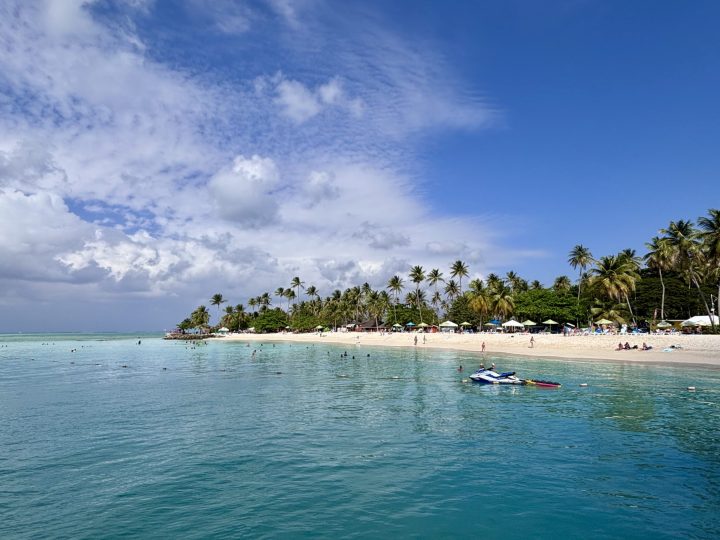
Pigeon Point also has different sections. Around the main beach the water is calm, shallow and almost lagoon-like. Walk farther along and you reach the windsurfing and foil side, where there is much more action on the water. Come here if you want to try windsurfing or other watersports. Check the current wind and wave forecast for Pigeon Point on Windfinder before you go. I already wrote a complete blog about Crown Point and Pigeon Point, including more about the beach and what you can do here.
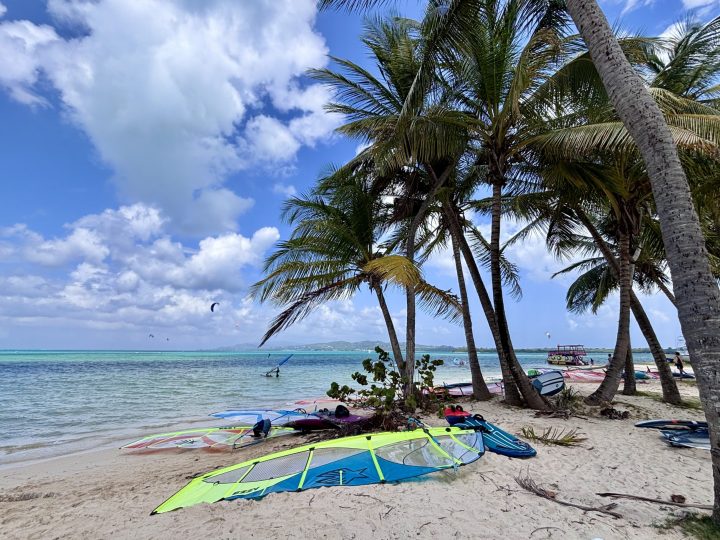
Come here if you want to try windsurfing or other watersports. Check the current wind and wave forecast for Pigeon Point on Windfinder before you go.
Mount Irvine Beach: the surf beach
Continue from Pigeon Point towards Mount Irvine. Do not confuse the watersports around Pigeon Point with Mount Irvine. Mount Irvine is the surf beach. Come here for proper board surfing and a very different sea from the calm water around Pigeon Point. The bay has different sections, so it is not only for surfers. Stop at the surf side even if you are just watching for a while, then continue north towards Castara.
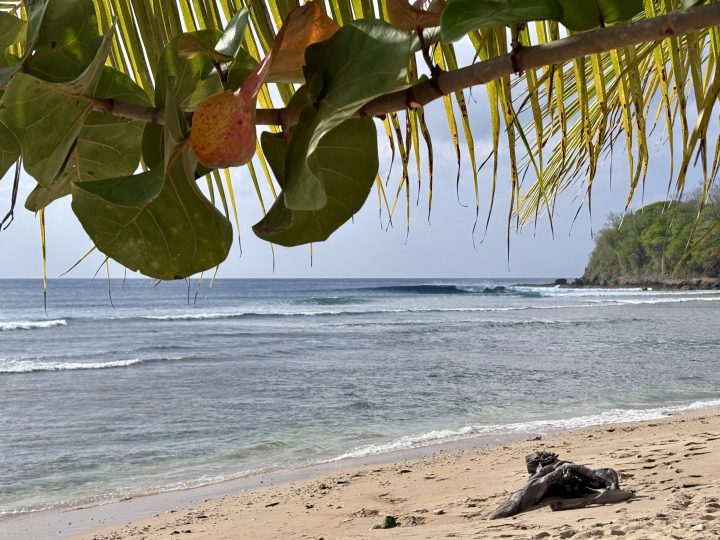
Castara Bay: my beach base in Tobago
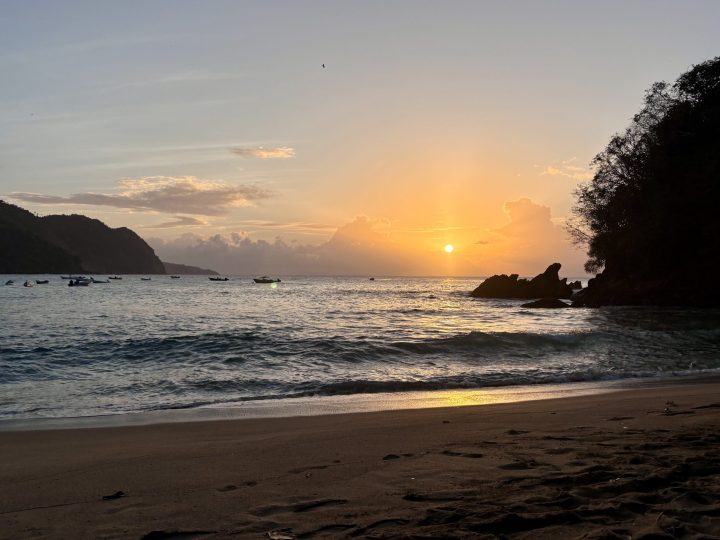
Castara was my base for several nights, so Big Bay and Little Bay became the beaches I knew best. Big Bay is the main village beach, with fishing boats pulled up on the sand and village life happening right beside the water. Little Bay is smaller and more tucked away. This is one of the advantages of staying in Castara. There is no need to plan a full beach day. Walk down for a swim, have something to eat, go back to your accommodation and return later. And stay for sunset. Castara faces the Caribbean side of Tobago and the sun drops over the sea.
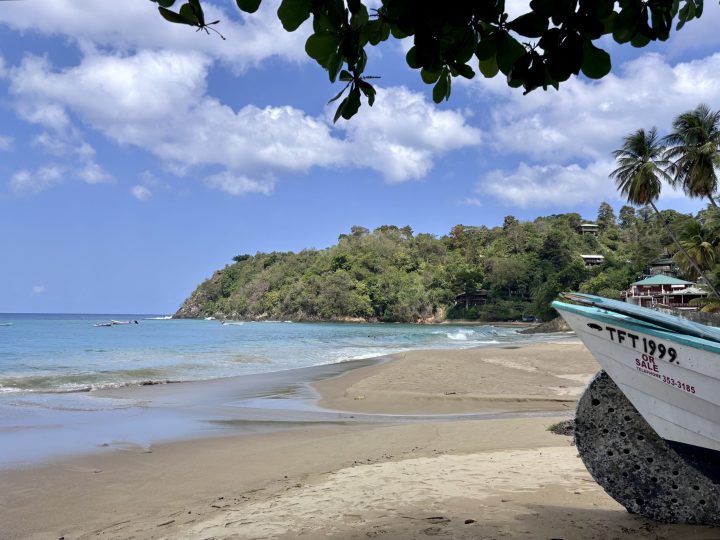
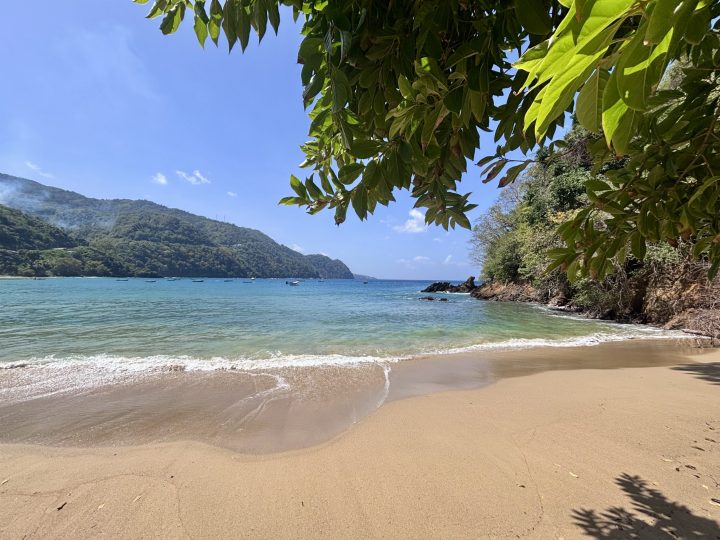
Englishman’s Bay: my favorite beach in Tobago
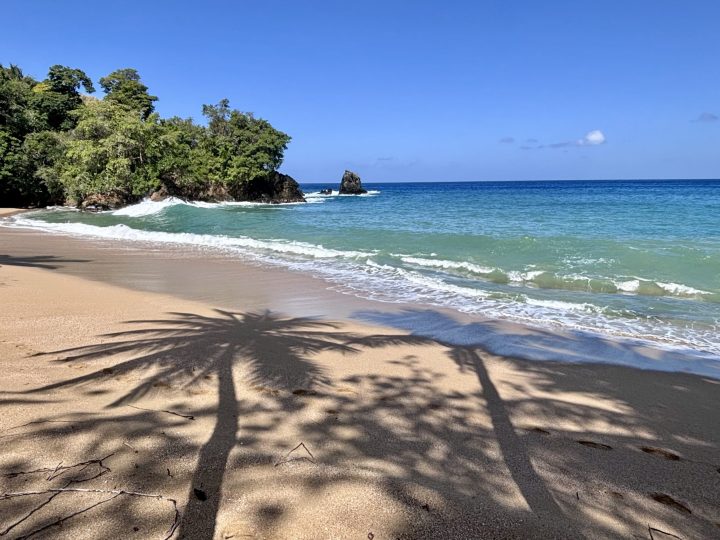
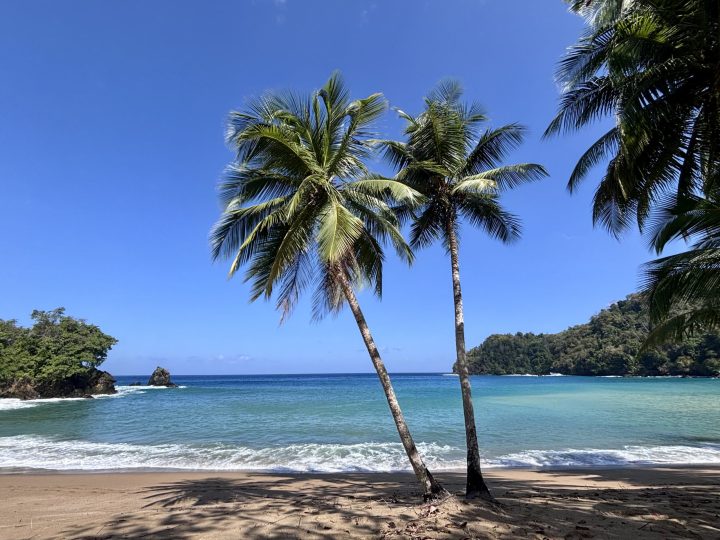
Continue north from Castara to Englishman’s Bay and stop at the viewpoint above the bay first. The view down between the green hills is already worth pulling over for. For me, this was the most beautiful beach in Tobago. Englishman’s Bay is completely different from Pigeon Point. Pigeon Point has calm, shallow, almost lagoon-like turquoise water. Englishman’s Bay is a proper open beach, with rainforest behind it and a much wilder sea in front.
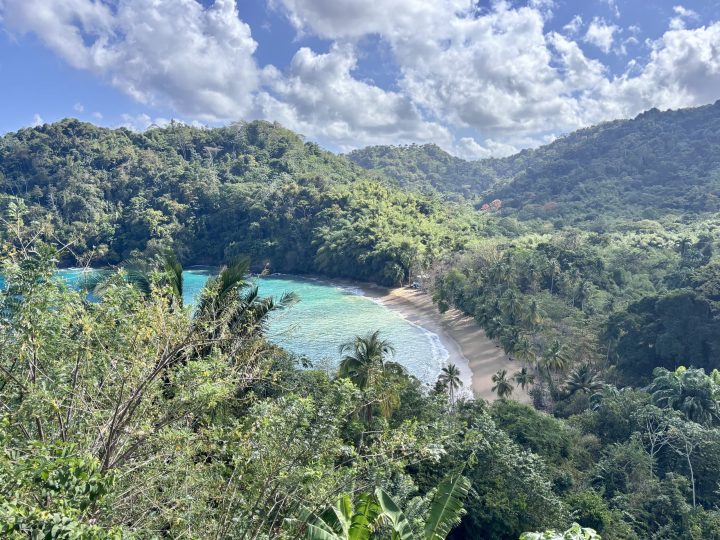
There is still enough here to stay for a while. Grab something to eat at the small restaurant, have a look in the souvenir shop and then spend some time on the beach. It never felt developed or busy when I was there. The water gets deep more quickly and there can be more movement in the sea, so do not expect the same easy shallow swimming as Pigeon Point.
Parlatuvier Bay: stop for the view
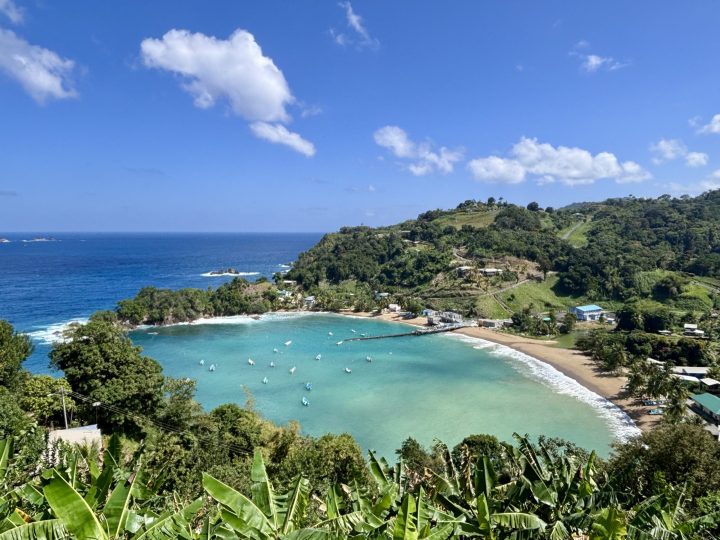
Continue along the coast towards Parlatuvier. I only saw this beach from above and did not spend time on the sand, so this is more of a road trip stop than a beach recommendation. Pull over for the view across the bay, village and fishing boats before continuing. From Parlatuvier, leave the coast and drive over the mountains and through the jungle towards King’s Bay on the other side of Tobago.
King’s Bay: more local, but not my favorite
King’s Bay has another local feel. People from the area were swimming when I visited, and there are simple changing facilities close to the beach. The water was calm, but this was probably my least favorite beach of the trip. After Englishman’s Bay and Castara, it simply did not have the same appeal for me. Still, stop if you are already driving this route. Have a look, take a swim if you like it and continue towards Speyside. I just would not make a special journey across Tobago for King’s Bay.
Speyside and Tyrell’s Bay
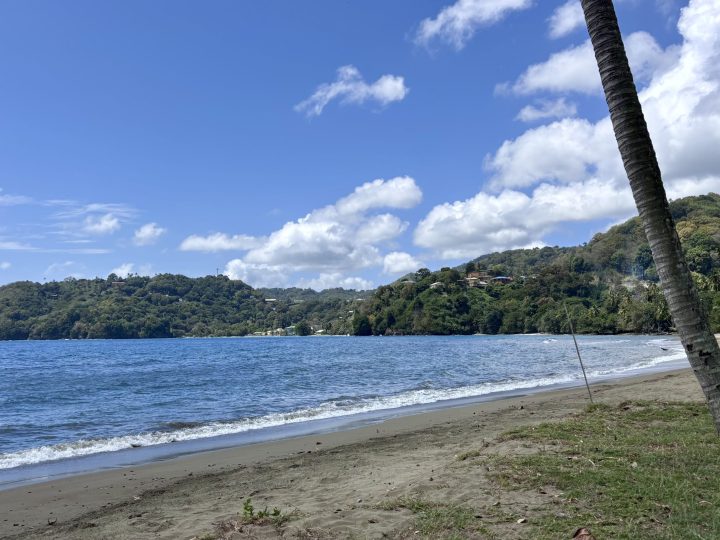
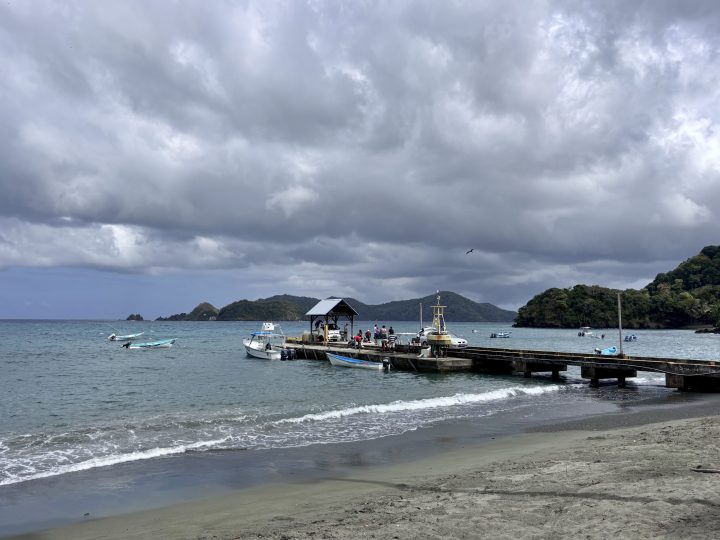
Continue north from King’s Bay to Speyside. My first impression of Tyrell’s Bay was not amazing, although the dark weather definitely played a part. Grey skies make quite a difference after the bright Caribbean colors on the other side of Tobago. Stop for lunch along the waterfront and the beach can look completely different when the light improves.Speyside is one of Tobago’s main areas for diving and snorkeling, with boats leaving for Goat Island, Little Tobago and the reefs around them. Come here for a snorkeling or diving trip rather than choosing it purely for a beach day.
Charlotteville and Man-o-War Bay
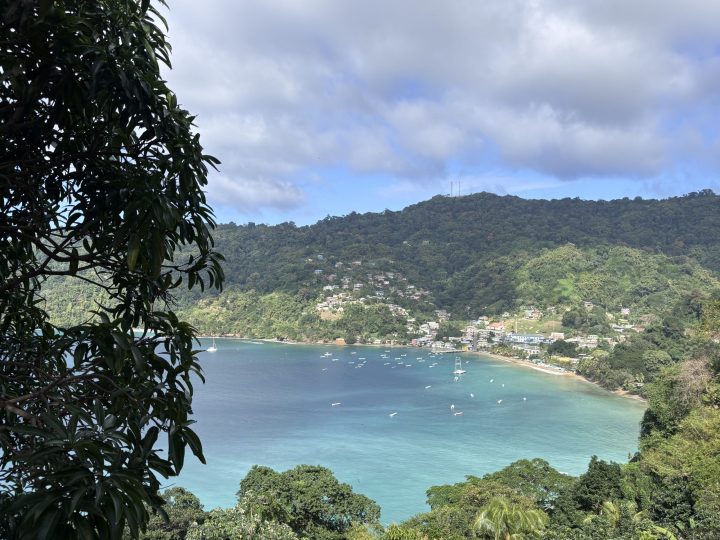
Continue from Speyside to Charlotteville. The whole setting makes this stop worthwhile. Charlotteville is a fishing village built around Man-o-War Bay, with boats in the water and houses against the green hills. Walk along the waterfront and onto the pier for a good view back towards the village. You can swim here too, but take some time to look around rather than stopping only for another beach.
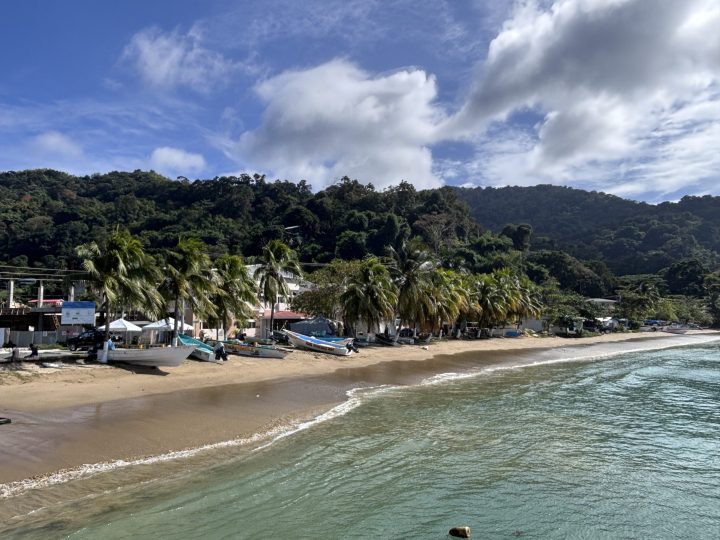
If you have more time, Pirate’s Bay is close to Charlotteville. Reach it on foot or take a boat from the village. I did not visit it myself, but it is an easy extra option if you stay longer around Charlotteville. From here, continue towards Bloody Bay.
Bloody Bay: quiet and beautiful
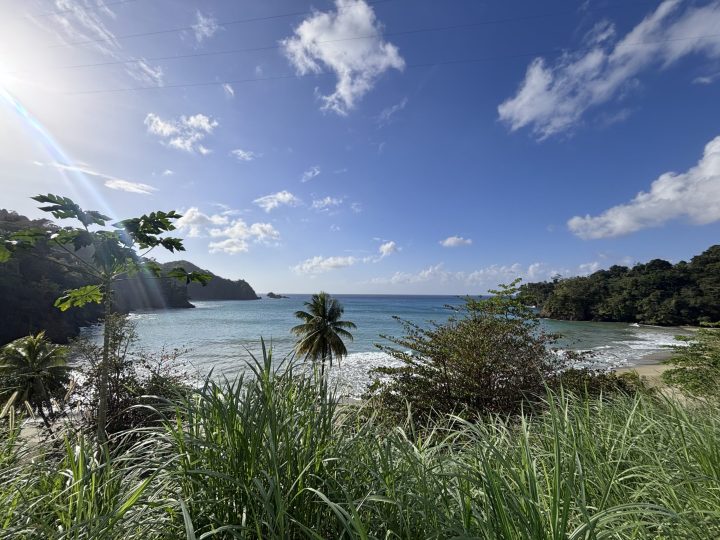
Bloody Bay was my final beach stop before driving back to Castara. It was very quiet when I visited, with green hills behind the beach and almost nobody around. Stop here for the setting and the quiet rather than restaurants, beach bars or lots of facilities. Spend some time here before heading back to Castara.
Back to Castara and Pigeon Point
Use Castara as a base and you can explore during the day without moving your luggage every night. Come back for a swim, dinner and sunset instead. Towards the end of my Tobago trip, I moved back to Crown Point and returned to Pigeon Point. After the quieter beaches around the island, it suddenly felt busy again, but that clear turquoise water was still difficult to beat. It made a very good last beach day before flying home.
Which Tobago beaches did I like most?
Englishman’s Bay was my favorite for the beach itself. Choose this one for rainforest, a quieter setting and a wilder sea. For that classic Caribbean look, go to Pigeon Point. The water is bright turquoise, there are palm trees everywhere and it is also the better choice for windsurfing and other watersports. Stay in Castara if you want the beach to be part of everyday village life instead of driving somewhere new every morning. You get Big Bay, Little Bay and sunset right outside your door. Add Bloody Bay for a quieter stop and Mount Irvine if surfing is part of your Tobago trip. King’s Bay and Speyside were lower on my personal list, although the weather definitely influenced Speyside when I was there.
Do you need a rental car for Tobago beaches?
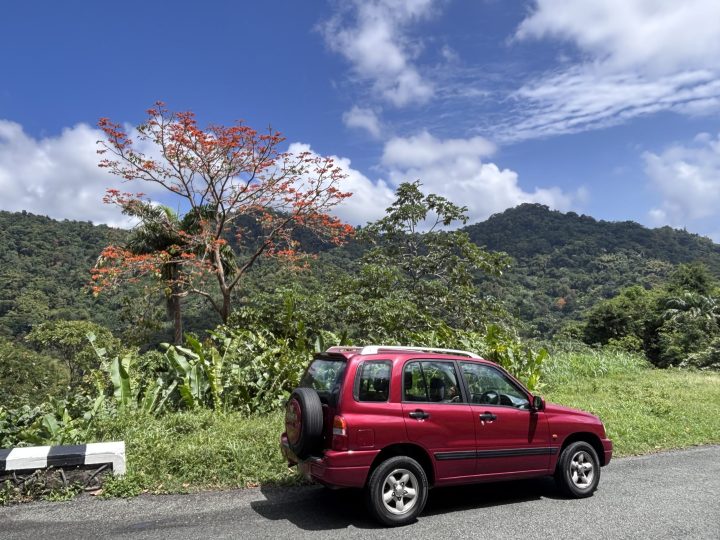
Not around Crown Point. Start with Swallows Beach and Store Bay on foot. Pigeon Point is also close enough to reach without planning a full island road trip. Rent a car once you want to continue to Mount Irvine, Castara, Englishman’s Bay and more Tobago beaches around the island. The distances on the map are not huge, but do not underestimate the roads. Once you get into the hills and rainforest, driving takes longer than you might expect.
More than beaches in Tobago
Do not make Tobago one long beach trip. Use the rental car to combine beaches with rainforest, waterfalls, viewpoints and small villages. That mix was what made Tobago much more interesting for me than simply staying at one resort for a week. For more ideas, continue with my Things to Do in Tobago blog, including the other stops around the island. If Castara sounds like your kind of base, read Where to Stay in Tobago: Why I Loved Castara.