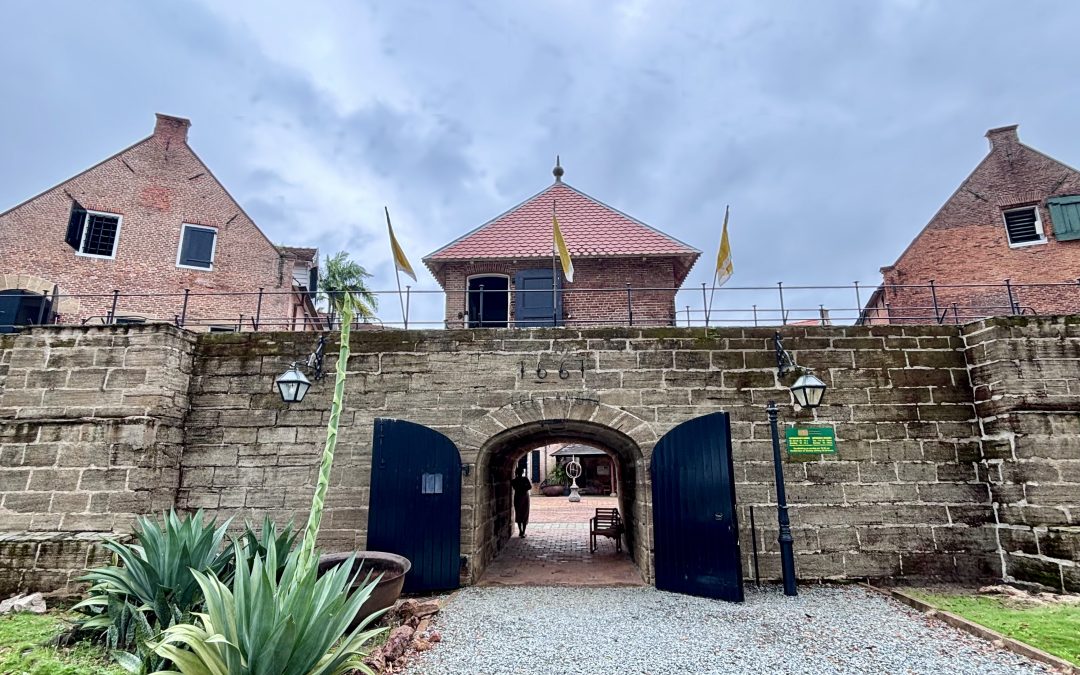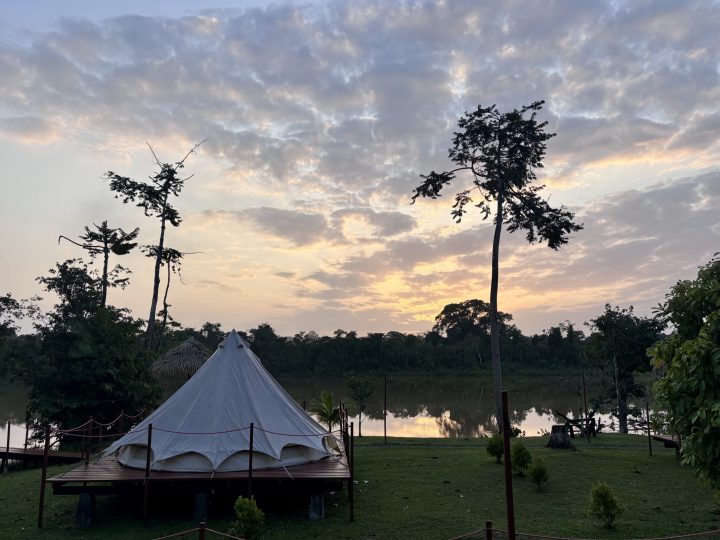
Glamping Seliba Suriname is one of the easiest ways to experience the rainforest if you want nature, jungle sounds and a little adventure, but still like the comfort of an organized tour. You travel from Paramaribo by minivan and boat, sleep in a safari-style tent along the river, join bird watching and a night walk, and wake up with howler monkeys in the trees.
After a few days in Paramaribo and the quiet plantations of Commewijne and Peperpot, I was ready to travel deeper into Suriname. Seliba was one of the places I was most curious about when planning my trip. Sleeping in a tent in the rainforest sounded exciting, although I was also very aware that I would not be alone there. And by not alone, I mean insects, frogs, spiders, birds, monkeys and probably many other animals I did not even see.
Why choose Glamping Seliba Suriname?
Seliba is not a luxury resort where everything is polished and perfect. It is simple glamping in the Suriname rainforest, with a comfortable bed, organized meals, guides and enough structure to make the experience easy. For me, that was exactly the reason to go.
I wanted to experience the jungle, but I did not want to arrange boats, food, guides and transport by myself. Especially as a solo traveler, an organized rainforest tour makes the trip much more relaxed. You still feel far away from daily life, but someone else has thought about the practical details.
Do not expect hotel luxury. Expect a simple rainforest camp with comfort where it matters most.
How to get to Seliba from Paramaribo
The trip to Seliba starts in Paramaribo. I left my accommodation early in the morning with a small daypack, because I would stay only one night before continuing to Knini Paati. My taxi dropped me at Pompstation Gow2, near the Jules Wijdenbosch Bridge, where the tour group was already gathering.
We traveled in a small minivan with seven travelers, two guides and the driver. A funny detail was that I recognized three travelers from earlier in Paramaribo. They were Dutch trainee nurses doing an internship in Suriname. These small travel moments always make a group feel familiar quickly. Before reaching the river, we made a few stops. We stopped at a supermarket for snacks, collected ice for the trip and made one unexpected stop that became one of the nicest parts of the journey.
A cassava bread workshop along the way
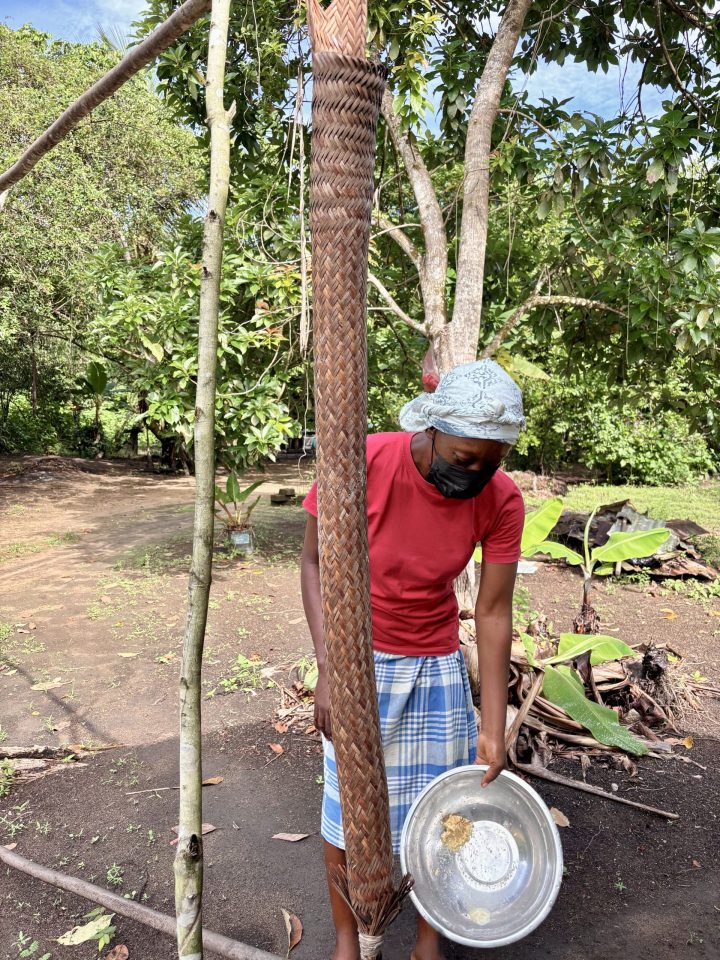
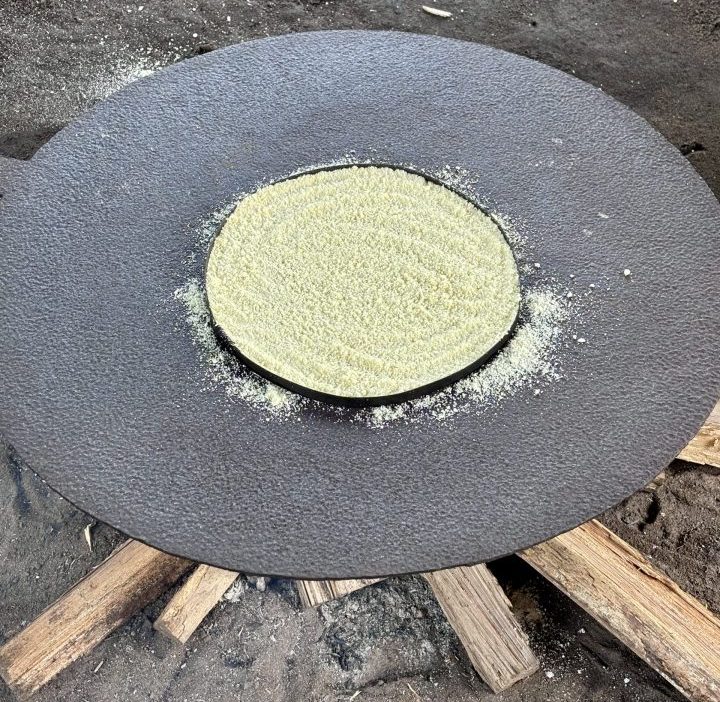
Along the road we visited a local woman who showed us how cassava bread is made. I had already seen cassava bread at the Central Market in Paramaribo, but I had no idea how much work it takes to make it. The cassava root is grated, pressed to remove the toxic liquid, turned into flour and baked on a hot plate above a wood fire.
We could taste the bread afterwards. It was dry and slightly sour, but very interesting after seeing the whole process. This kind of stop gives a Suriname tour more meaning. You do not only move from one place to another, but you also learn something about the food and daily life along the route.
The boat ride into the jungle
At the river, we found out that the original boat had engine trouble. The guides quickly arranged two smaller boats instead and transferred all luggage, supplies and coolers. It was a good reminder that traveling in Suriname sometimes asks for flexibility.
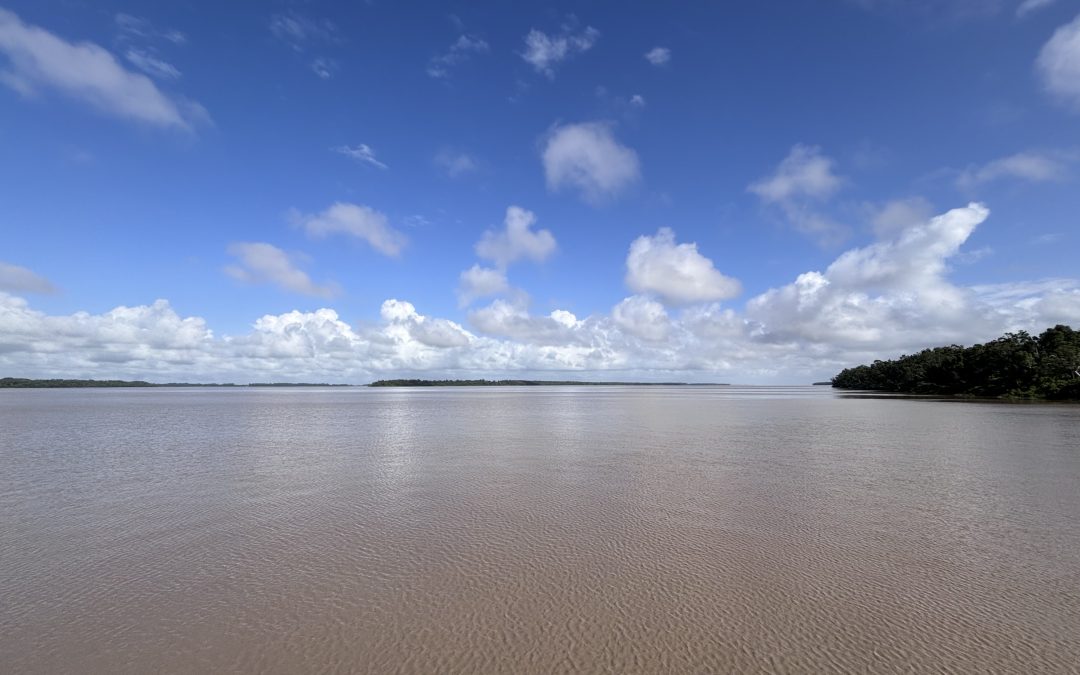
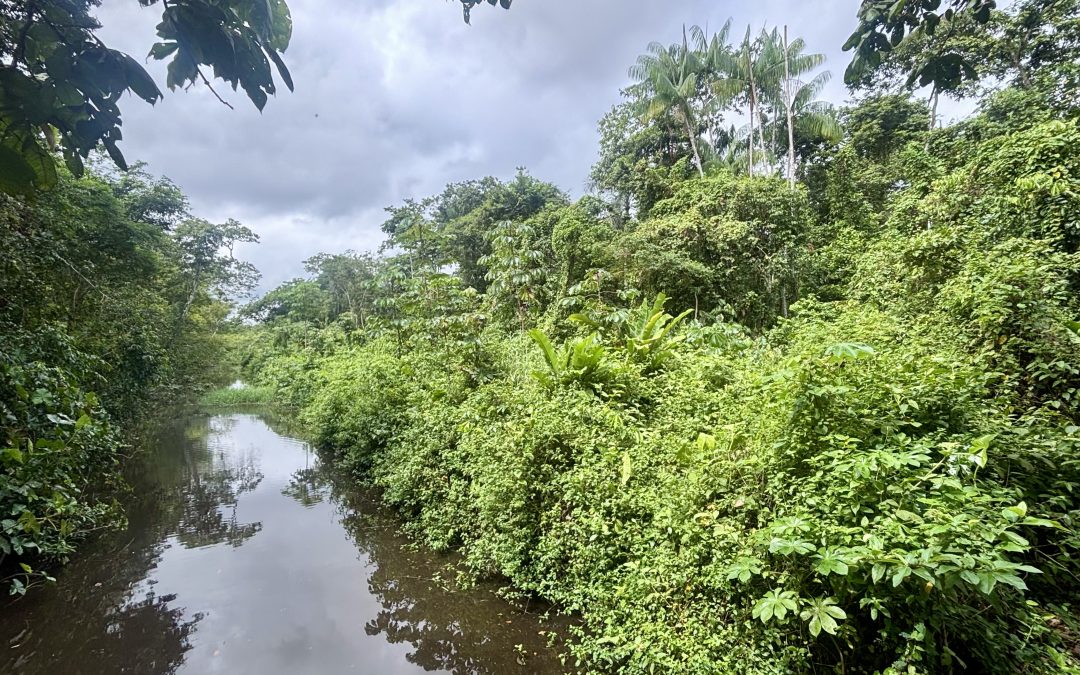
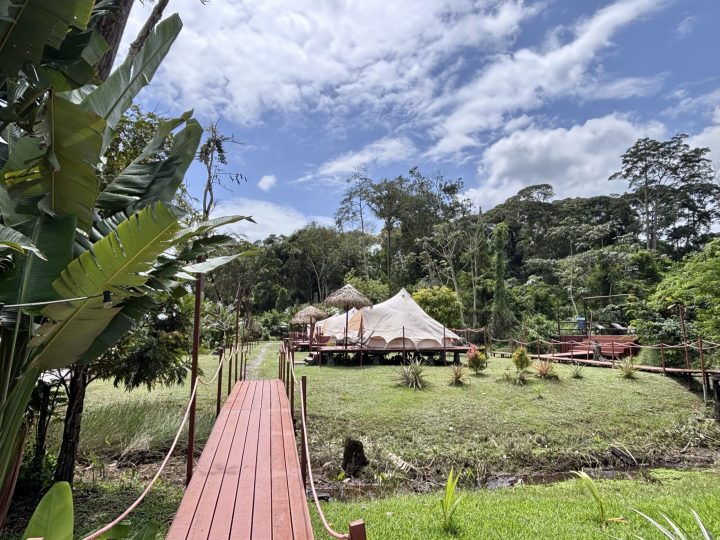
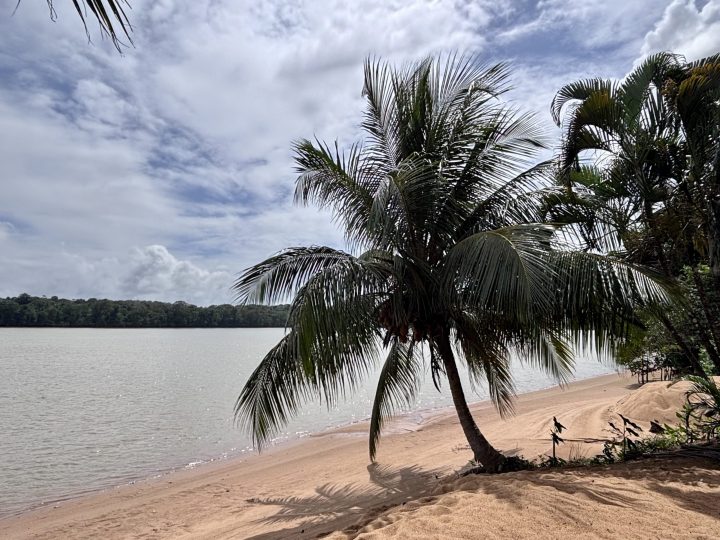
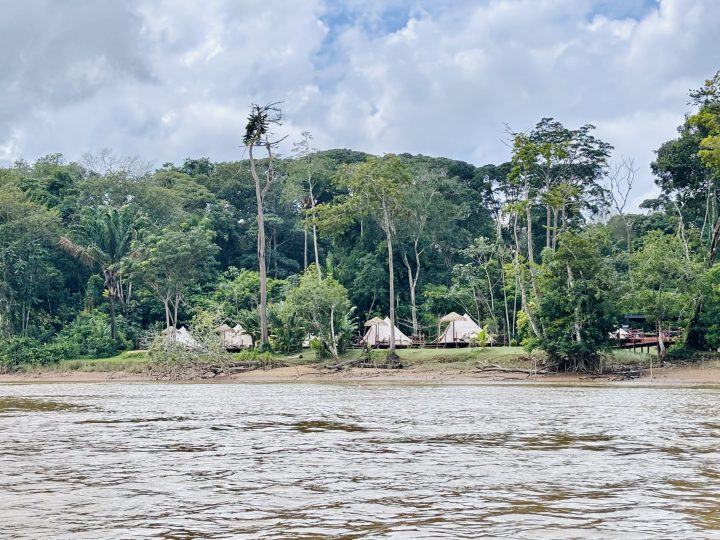
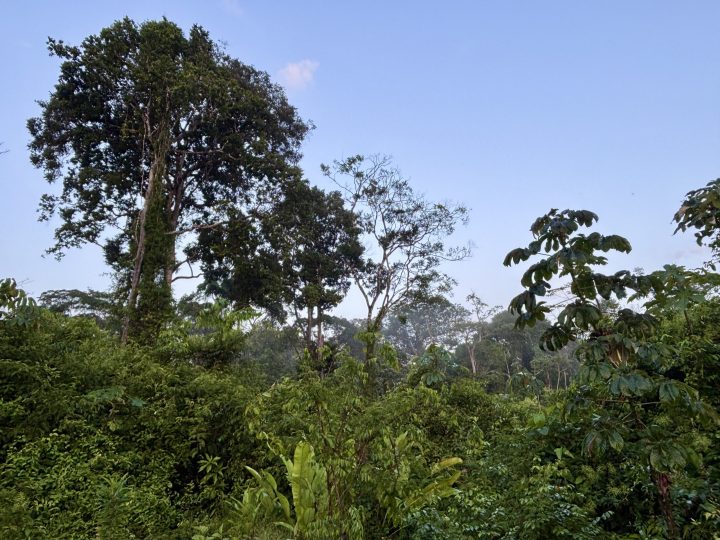
Once we were on the water, the journey changed completely. The river was wide and brown, with dense green rainforest on both sides. The breeze felt wonderful after the warm minivan ride, and the further we traveled, the more remote everything felt. After about ninety minutes, we arrived at Seliba camp. The white tents stood on wooden platforms along the riverbank, surrounded by tall trees and the sounds of the forest.
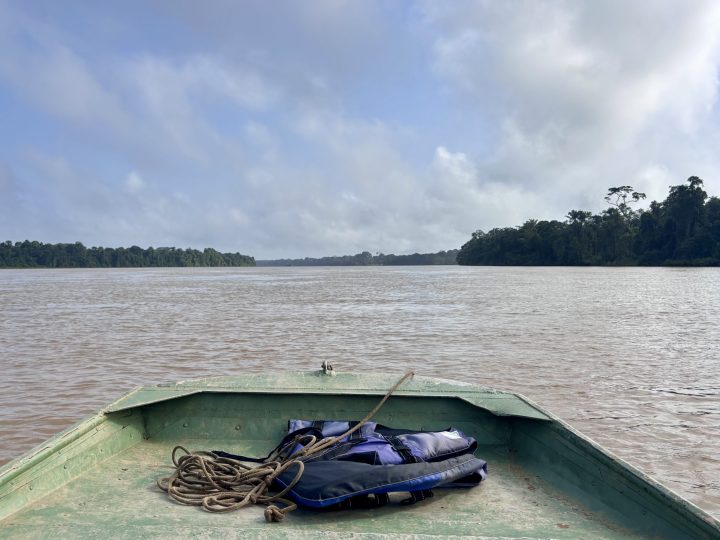
Bring sunscreen, a hat and enough water for the boat ride. The breeze feels fresh, but the sun on the river can be strong.
Arrival at Seliba rainforest camp
Lunch was ready when we stepped off the boat. Long wooden tables stood under a simple roof, and everything felt surprisingly organized for such a remote location. I always like that contrast: you are deep in nature, but someone is already waiting with food.
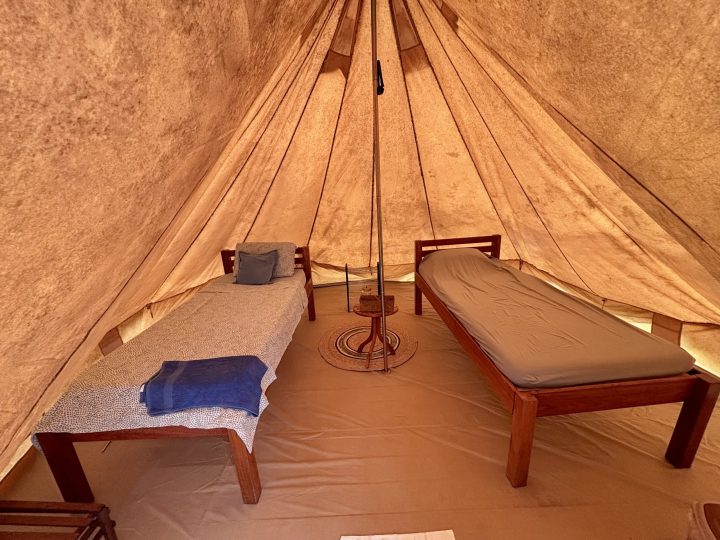
The tents are safari-style and stand on raised wooden platforms. Inside there is a comfortable bed and some simple decorations. It is basic, but thoughtful. For one or two nights, it gives enough comfort without taking away the feeling that you are really staying in the rainforest.
During the afternoon the tent can become warm, but after sunset it cools down quickly. The shared sanitary facilities are simple but clean. The showers are cold, but in the humid jungle that actually feels refreshing.
Bring slippers for the shared areas!!
What to do at Seliba
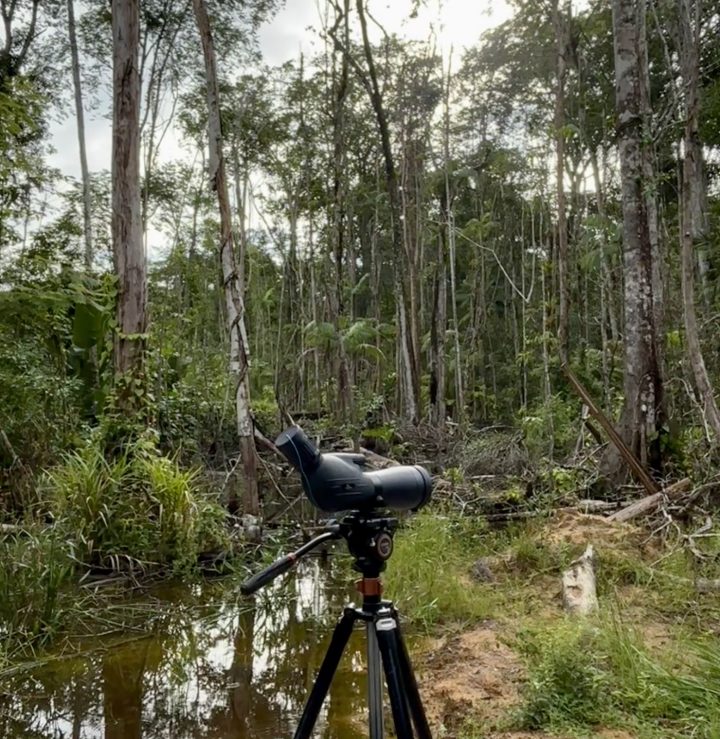
The afternoon was relaxed. We played volleyball with the staff, and some travelers went swimming in the river. I also took a short swim. The water is brown, so you cannot see much, but it felt great in the warm climate. Later we joined a bird watching session with guide Freek. With bird sounds and a telescope, we spotted several tropical birds, including toucans. Watching them through the telescope made it much easier to see the colors and details.
Bird watching is one of those activities that sounds quiet, but becomes more fun when you have a good guide. Suddenly you start looking differently at the trees around you. A sound is not just a sound anymore. It belongs to something colorful hiding high above your head.
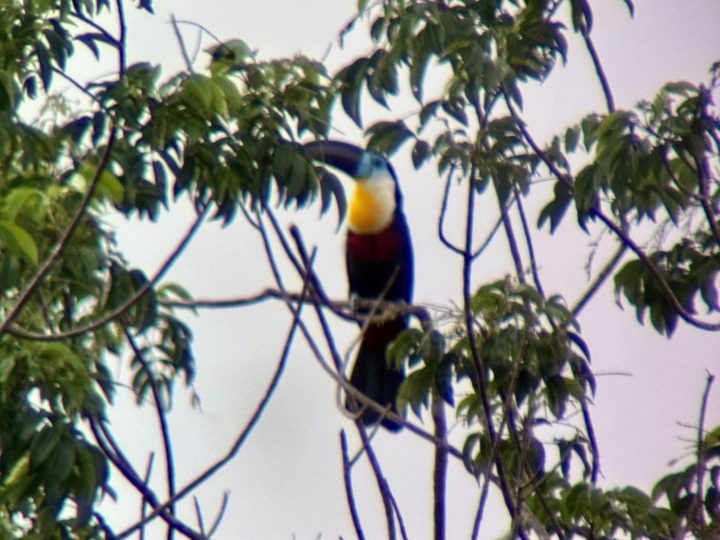
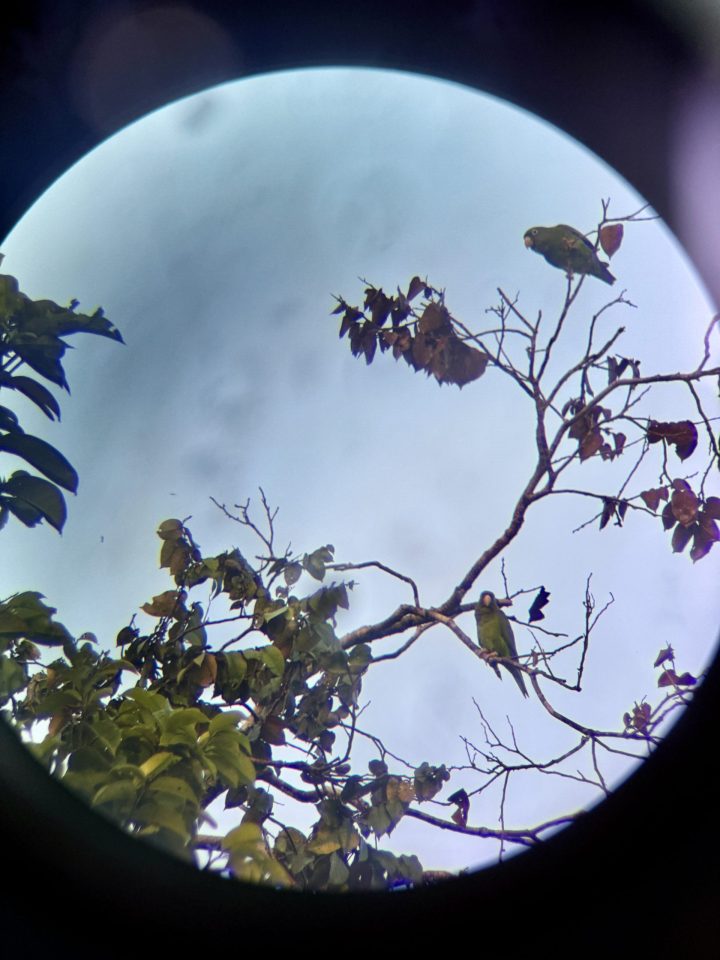
Try taking a photo through the telescope. It gives your phone a natural zoom effect.
The night walk in the rainforest
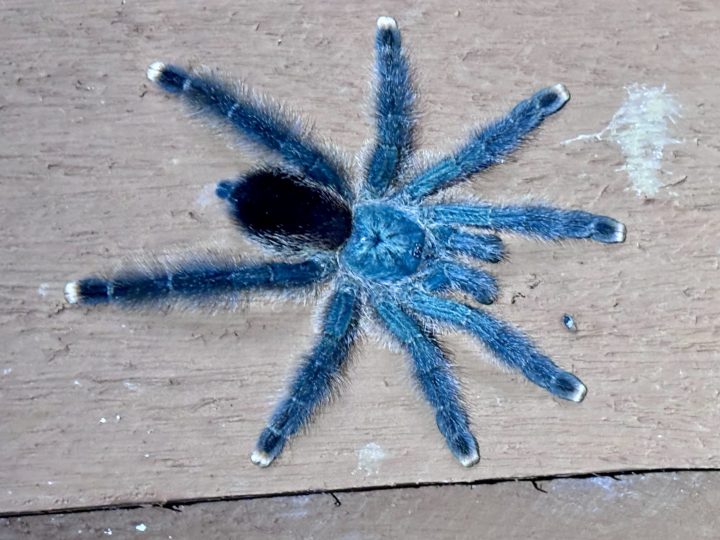
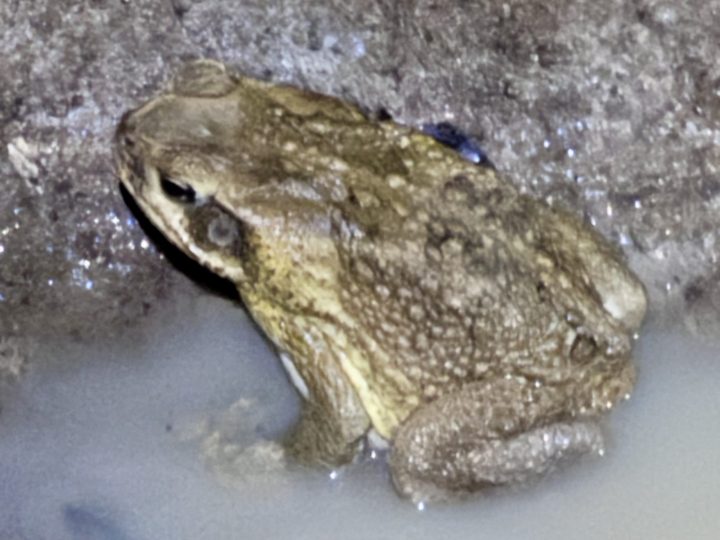
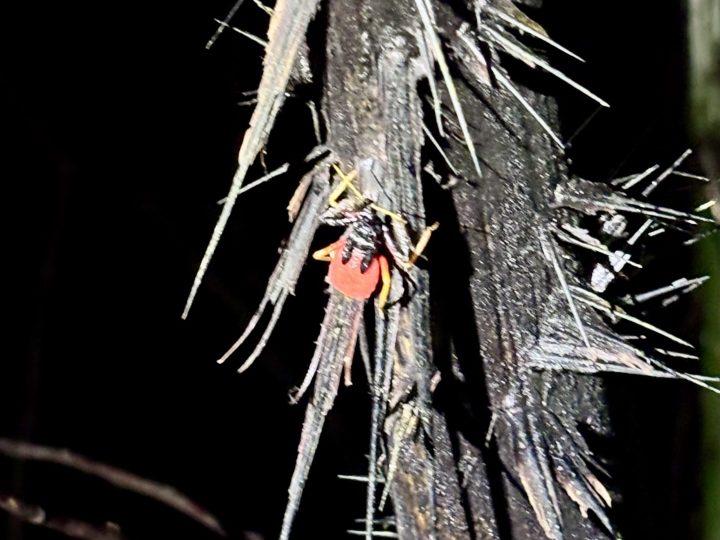
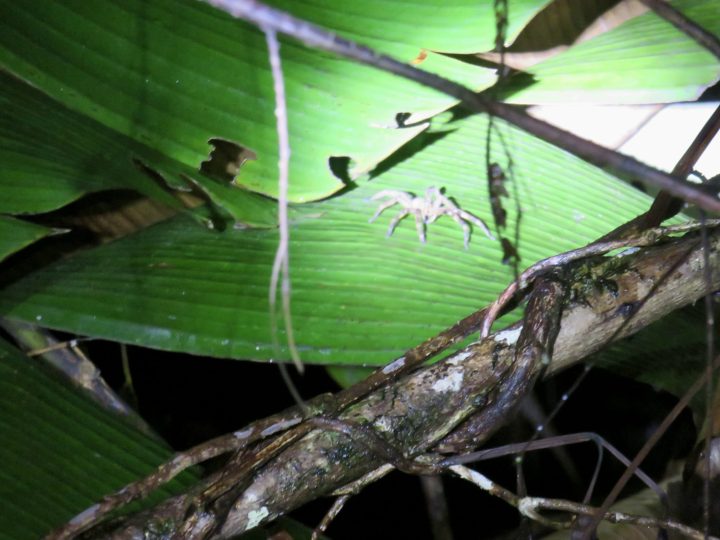
After dinner we went on a night walk with headlamps and a local guide. Even close to the camp we saw tarantulas and frogs. I am quite afraid of spiders, but seeing them in the wild felt more impressive than scary.
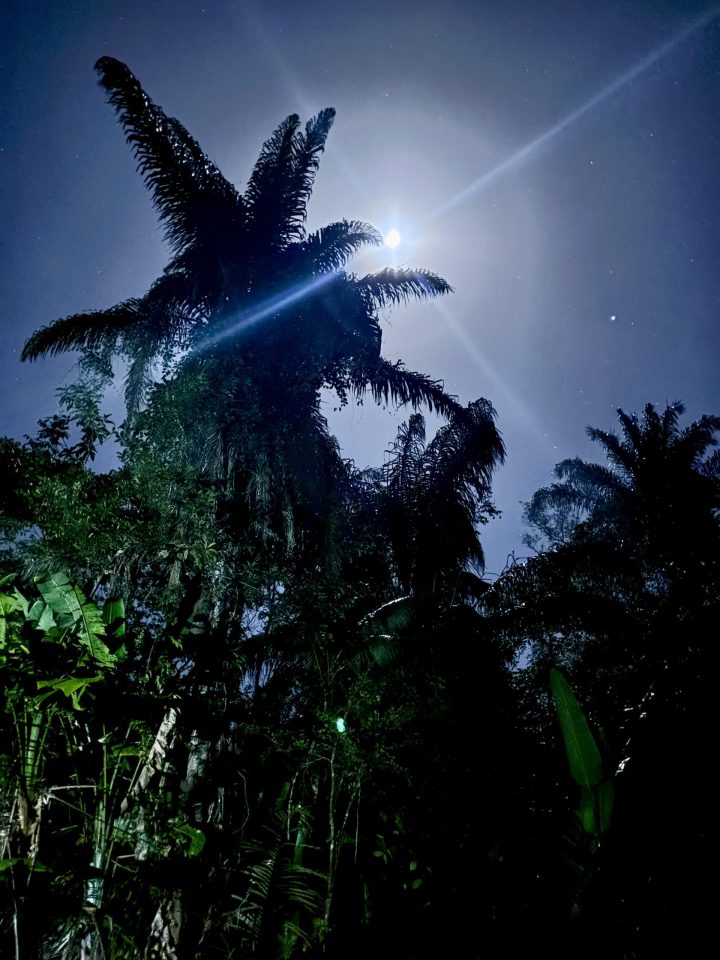
Further along the trail we spotted a snake and watched fireflies moving between the trees. At one point the guide asked us to turn off all lights. Even with the moon above us, the forest felt incredibly dark. That kind of darkness is rare when you live in places with streetlights everywhere.
After nearly two hours we returned to camp, where a fire and hot tub were waiting. It sounded lovely, but this old lady was ready for a shower and some proper sleep. I just hoped I would not dream about spiders.
Bring earplugs. The frogs can be very loud at night, and the rainforest never becomes completely quiet.
Waking up with howler monkeys
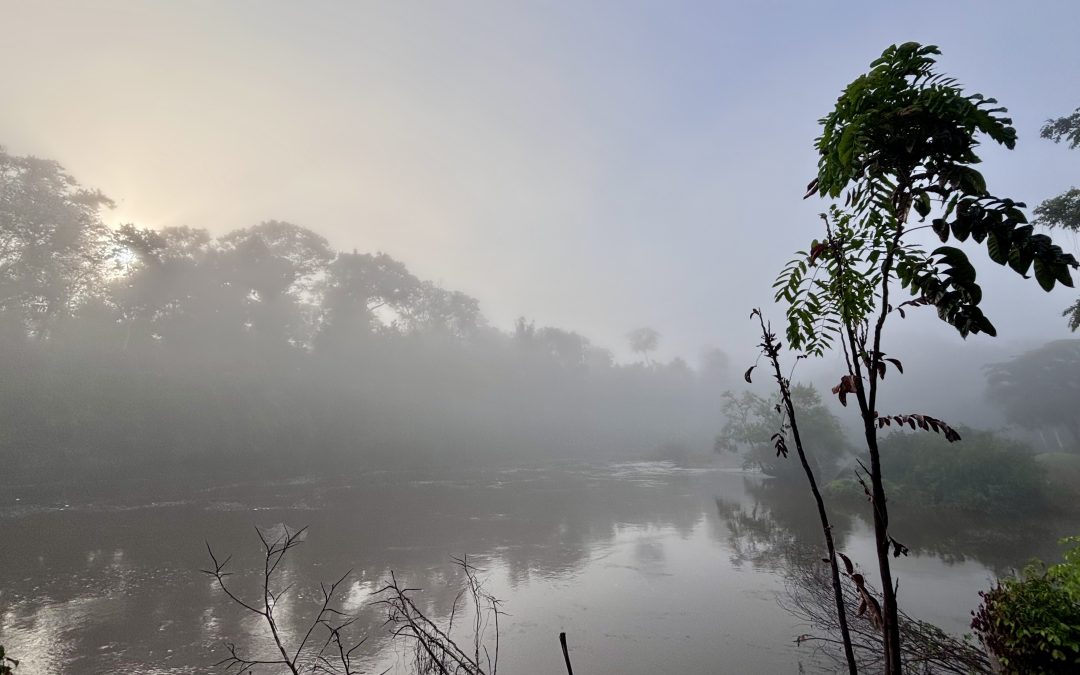
I woke up to the deep calls of howler monkeys rolling through the forest. It is such a strong sound that you immediately remember where you are. No traffic, no city noise, no hotel hallway. Just the rainforest waking up around you.
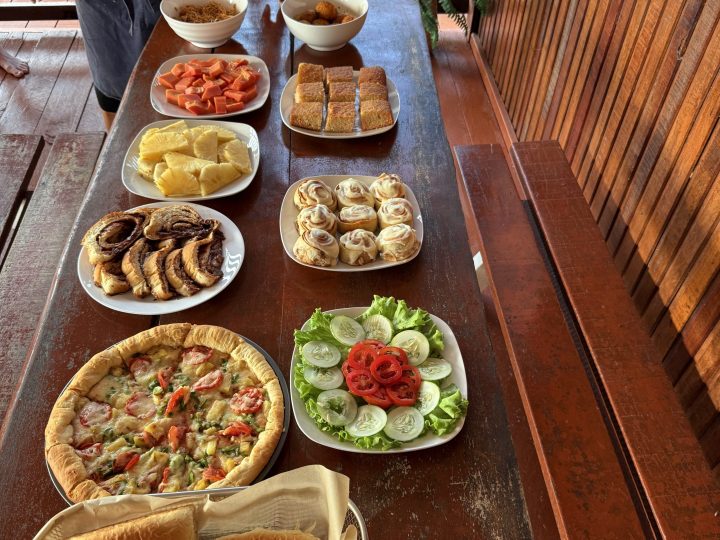
Until I suddenly had to run to the bathroom. That is also life as a middle-aged woman in the jungle. Nature can be magical, but your body still has its own schedule. At 7:00 AM another bird watching session started. After that it was time for breakfast, with cinnamon bread, fruit, coffee and “broodje” pom. Not my usual breakfast, but perfect before another boat trip.
Seliba tour price and practical tips
The Seliba tour costs around 250 USD. This includes transport from Paramaribo, the boat transfer, accommodation, meals and guided activities. Prices can change, so always check the current amount before booking.
Pack light for Seliba. A small daypack is enough if you stay one night. Bring light clothes, mosquito repellent, sunscreen, a hat, slippers, a flashlight or headlamp, earplugs and a rain jacket. A refillable water bottle is useful during the journey, and a dry bag can help during the boat ride.
Smart routing tip: continue to Knini Paati
Most travelers return to Paramaribo after Seliba. I continued directly to Knini Paati instead. This saved me a full travel day and made my route through the rainforest much more logical. The connection between the two tours was arranged through Unlock Adventures. That made the planning much easier. If you already know you want to visit both Seliba and Knini Paati, ask your tour operator if they can connect the two. This is one of those small itinerary choices that can make a big difference. You spend less time going back and forth, and more time actually enjoying the river and the jungle.
Frequently asked questions about Glamping Seliba Suriname
Is Glamping Seliba Suriname worth it?
Yes, especially if you want to experience the Suriname rainforest with comfort and guidance. You sleep in a simple glamping tent, join activities like bird watching and a night walk, and do not have to arrange transport or meals yourself.
How do you get to Glamping Seliba Suriname from Paramaribo?
Most tours start in Paramaribo with minivan transport to the river. From there, you continue by boat to Seliba, which makes the journey part of the rainforest experience.
Can you combine Glamping Seliba Suriname with Knini Paati?
Yes, and this is a smart option if you want a logical rainforest route. I continued directly to Knini Paati instead of returning to Paramaribo, which saved a full travel day.
Let Me Inspire You Takeaways!
Seliba is not about perfect luxury. It is about waking up with howler monkeys, watching toucans through a telescope, walking through the dark jungle with a headlamp and realizing how alive the rainforest is after sunset. I loved that Seliba made the jungle feel accessible. There was enough comfort to sleep well, but still enough nature to feel far away from daily life. For me, it was the perfect step between Paramaribo and deeper rainforest travel.
My next stop was Knini Paati, and that made the route even better. If you are planning your Suriname itinerary, do not see Seliba as a separate stop only. Let it be the beginning of your journey deeper into the rainforest.