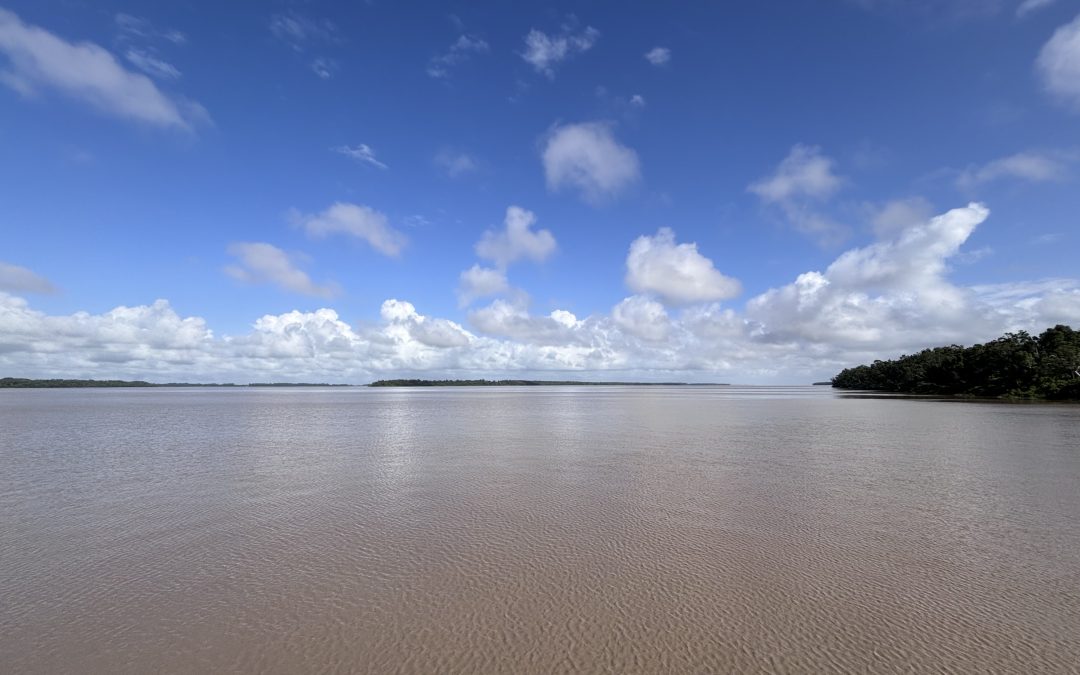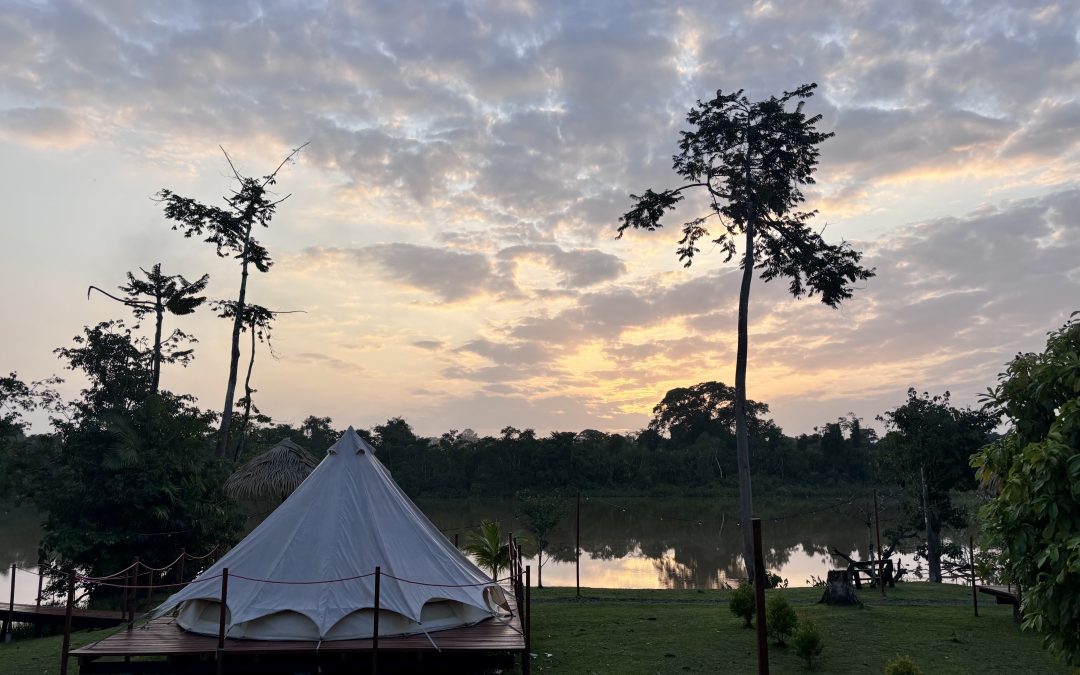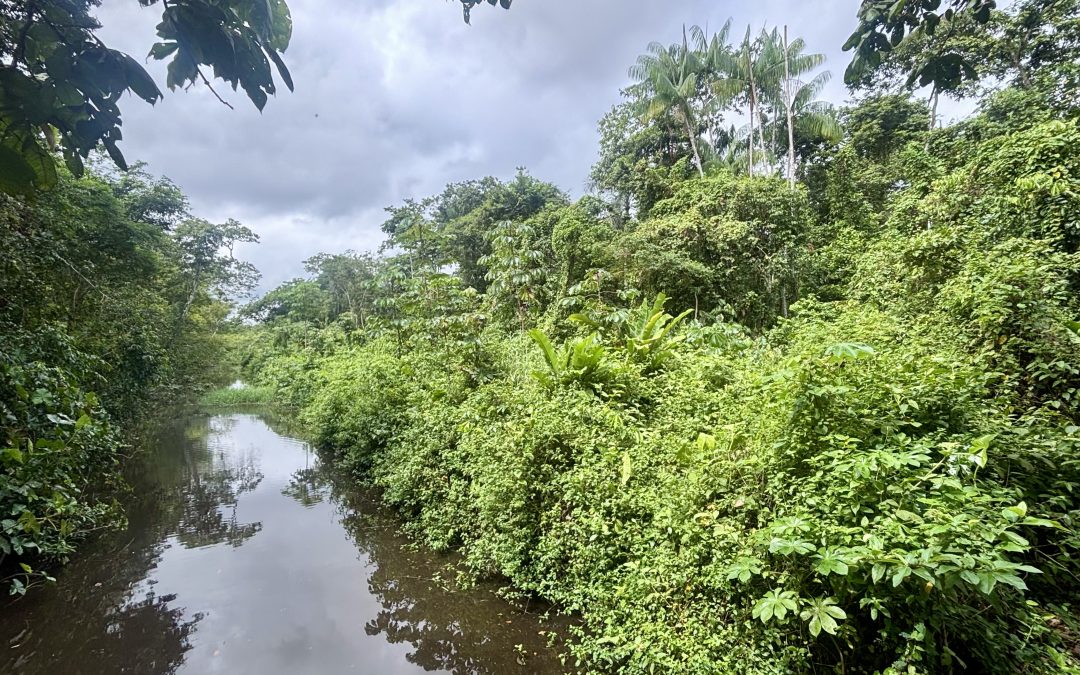
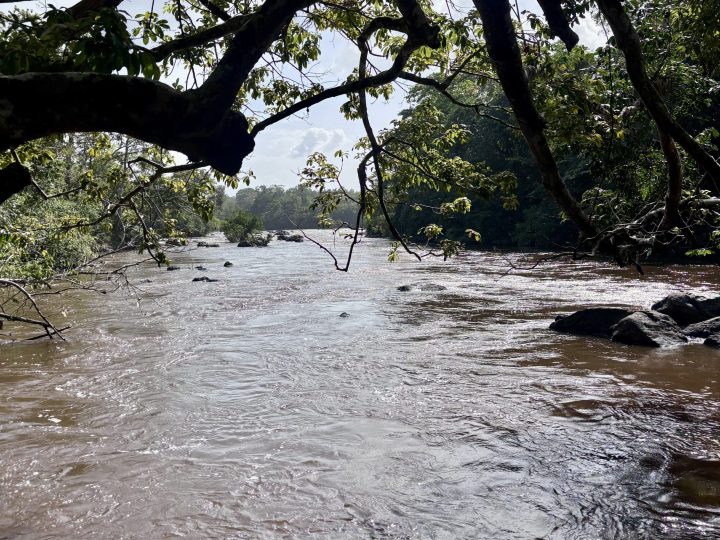
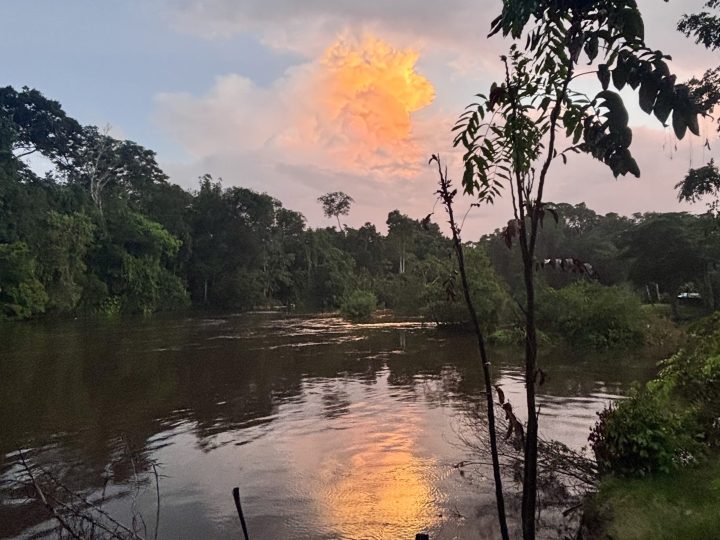
After my stay at Seliba I continued further along the Suriname River to Knini Paati. I was curious to see another lodge in this region and compare the atmosphere with Seliba. The transfer was arranged directly from Seliba so I did not have to travel back to Paramaribo first, which saved a lot of time. Knini Paati lodge lies along the Upper Suriname River, surrounded by dense rainforest and close to several Maroon villages. The river is the lifeline of this region and everything moves over the water here. It is wide and slowly flowing, with green forest walls on both sides. The lodge combines river life, forest and culture. Compared to Seliba it feels slightly more organized and social, but still very much surrounded by nature.
Getting to Knini Paati from Atjoni
The day started with a transfer from Seliba to the pickup point for the Knini Paati transport. From there we continued by minibus to Atjoni, the place where the road ends and the river begins. The drive took about one to one and a half hours depending on the road conditions. The bus was comfortable and they even handed out sandwiches and bottles of water during the drive. A small detail, but after traveling in the heat it was very welcome. Halfway we stopped briefly for a bathroom break. The landscape slowly changed into dense rainforest as we moved further inland.
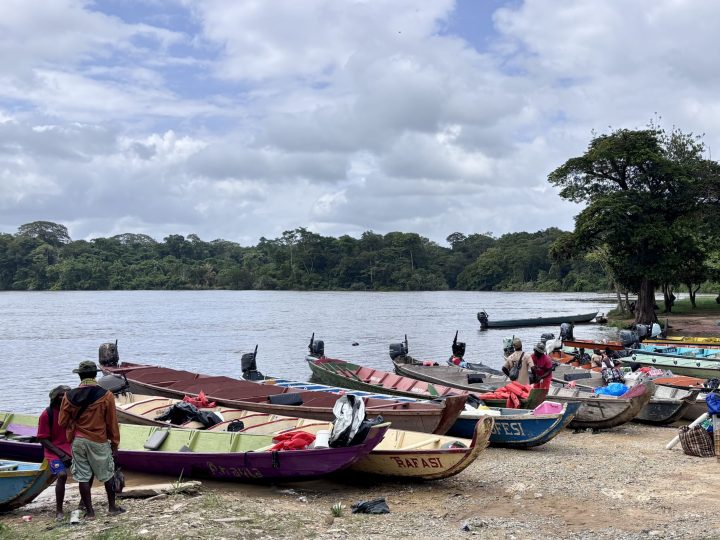
At Atjoni our korjaal was already waiting. This long wooden boat is the main transport on the river. In total we were fourteen guests and three staff members on the boat, together with all the supplies for the lodge. Food boxes, luggage and coolers were stacked carefully before we left. You sit quite low in the boat and it moves fast across the water. Photography of local people along the river is not allowed without permission, and the guide clearly explained this before departure.
The boat ride took about one hour and was already a great start of the stay. The engine hummed steadily while the korjaal cut through the brown river water and passed a few small rapids along the route. Green riverbanks passed by slowly and now and then we saw small wooden houses between the trees.
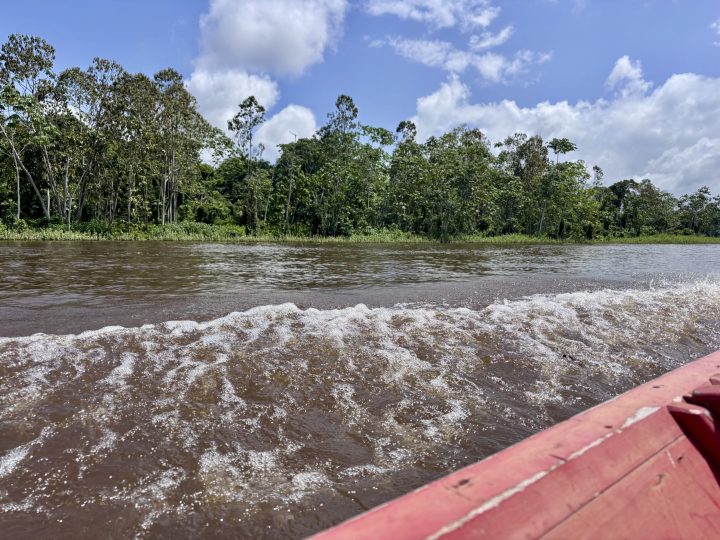
Bring sunscreen, sunglasses and a dry bag for your camera during the boat ride.
Arrival at Knini Paati
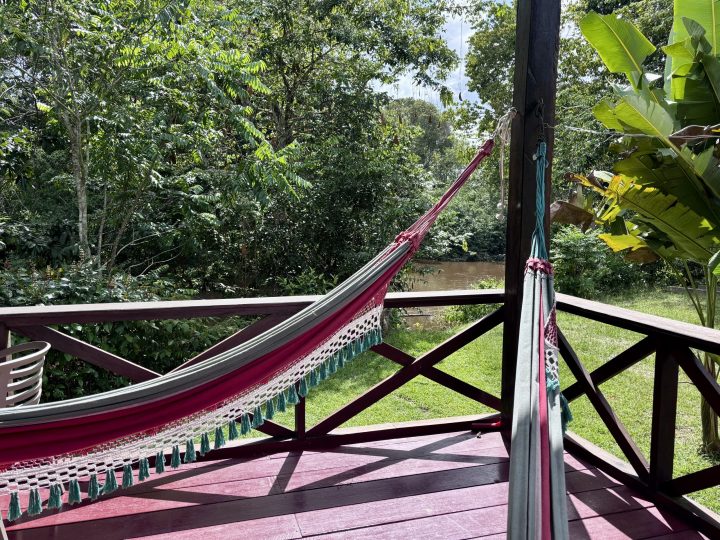
When we arrived a table was waiting with the program for the next days and a fresh coconut. A very warm welcome. A real Surinamese lunch was already prepared and after the journey it tasted excellent. The cabins are spread around the island, surrounded by large trees and the river on all sides. Knini Paati itself is a small island in the middle of the Suriname River, which gives the lodge a very peaceful setting. Each cabin has two large beds, air conditioning, a warm shower and a terrace with hammocks. After my glamping stay in Seliba this felt like a small luxury.
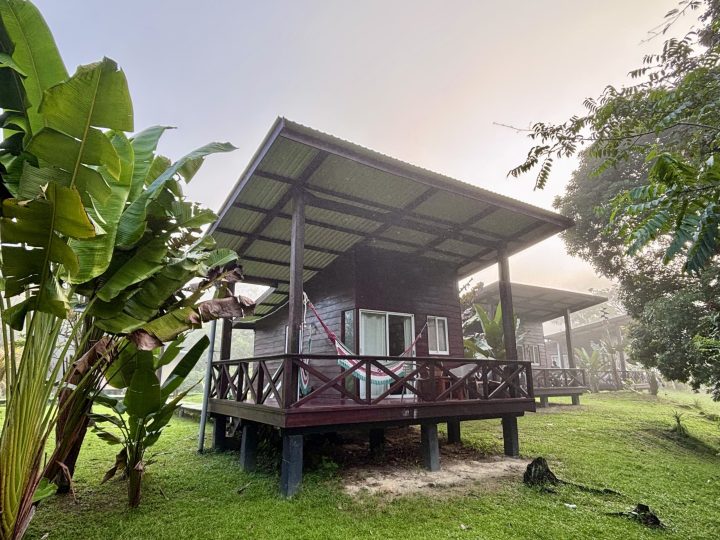
Swimming in the Suriname River
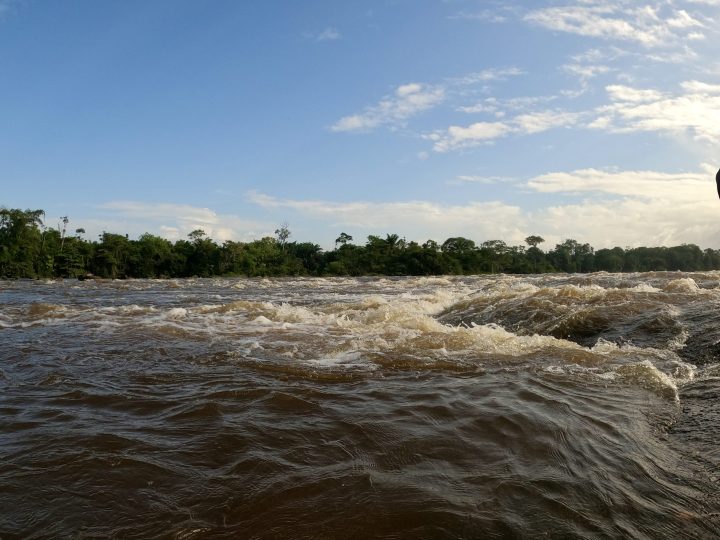
Shortly after lunch the first activity started. We stepped back into the korjaal and went a little upstream to a part of the river with small rapids. Here we could jump into the water and float between the rocks in the current. The guides joked about piranhas in the river but assured us it is safe to swim here. The water was refreshing in the tropical heat. The current creates a natural bubble effect between the rocks but you have to hold on well because the water moves strongly. Loved it!!
Bring your GoPro for perfect river moments like this!
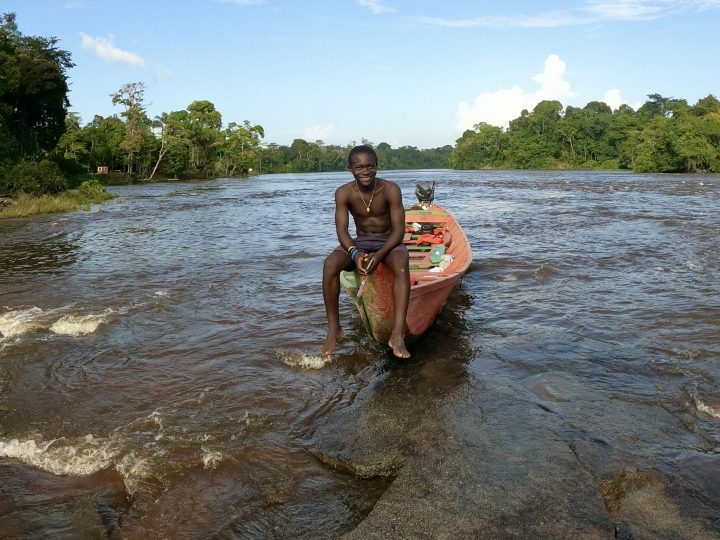
After about an hour we returned to the lodge just when a heavy tropical rain shower passed over the river. It poured intensely for maybe ten minutes and then suddenly the sun returned again as if nothing had happened. Around 17:00 a small snack was served: fried banana with peanut sauce. Sweet, warm and perfect after swimming in the river.
Evening caiman tour
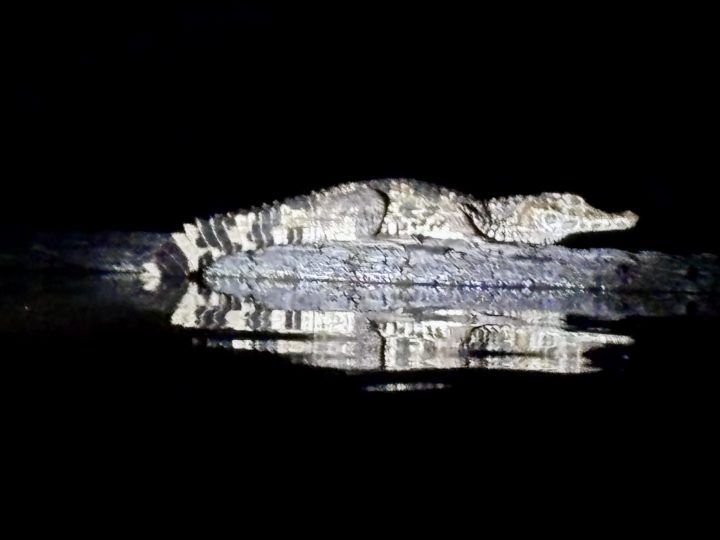
At 19:00 the next activity started. We went onto the river again to search for caimans along the riverbanks. The moon was almost full which made the river surprisingly bright. The water reflected the light and the forest along the river looked almost silver in the distance. The guide used a flashlight to look for the reflection of the animals’ eyes. We spotted a few caimans along the muddy banks. While the boat moved slowly along the river you could hear insects and frogs in the forest. The guide patiently kept searching until he found one close enough for everyone to see clearly and take a proper photo. We were lucky this one stayed on the wooden riverbank for a moment, perfect for a picture.
Back at the lodge dinner was ready. Several dishes were served buffet style and the atmosphere with the other travelers was relaxed and friendly. Most guests were from the Netherlands, but there were also travelers from Scotland and the United States. After selecting a few photos from the day I quickly fell asleep in my comfortable cabin.
Morning mist on the river
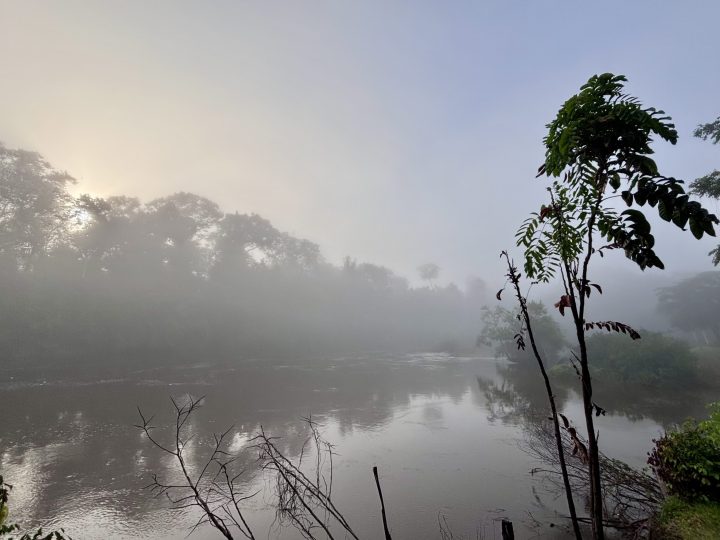
The river looked beautiful in the early morning. A thin layer of mist covered the water and the first birds were already calling from the forest. It was one of those calm jungle mornings where everything feels very still. A small basket with hot water for tea or coffee, including cups, was waiting on my veranda. A perfect and quiet way to wake up in the middle of the jungle. Breakfast was served at 08:00 and again the buffet was generous with fruit, eggs and fresh bread. Around 09:00 we stepped into the boat again for a visit to the nearby village Nieuw Aurora.
Visiting Nieuw Aurora
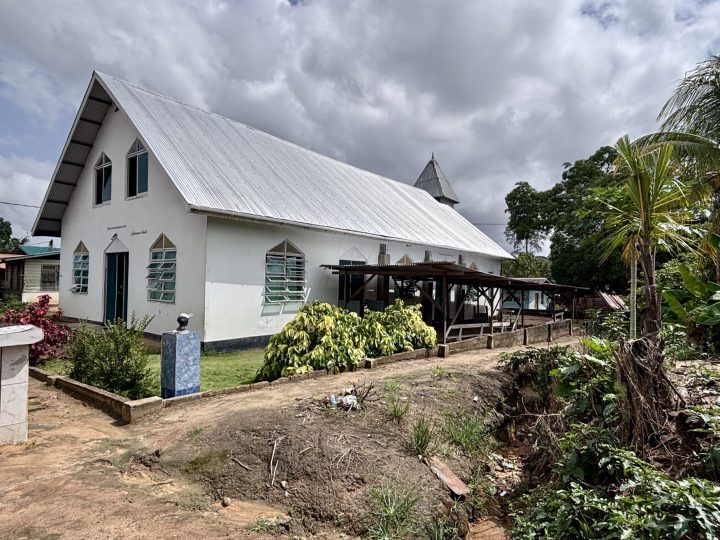
Nieuw Aurora is a Saramaka Maroon village along the Upper Suriname River. These communities were formed by enslaved Africans who escaped the plantations centuries ago and established independent settlements deep in the rainforest.
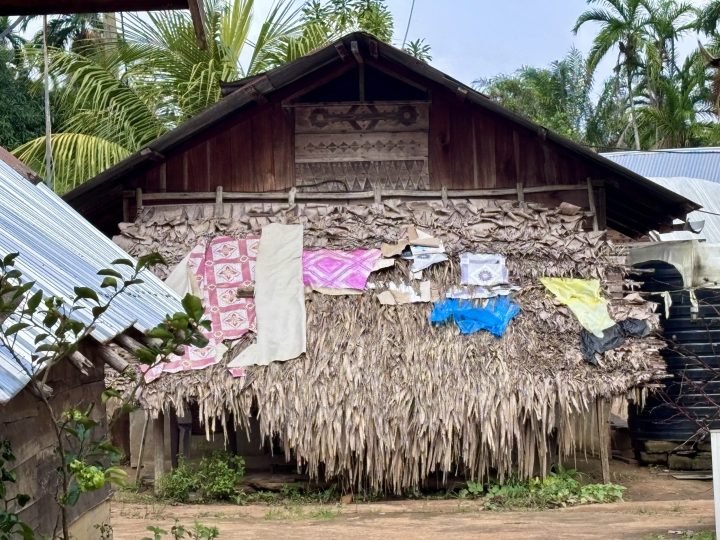
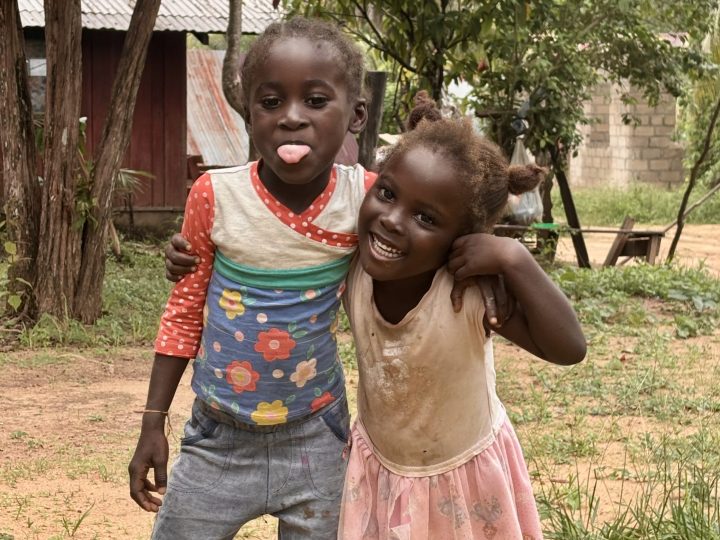
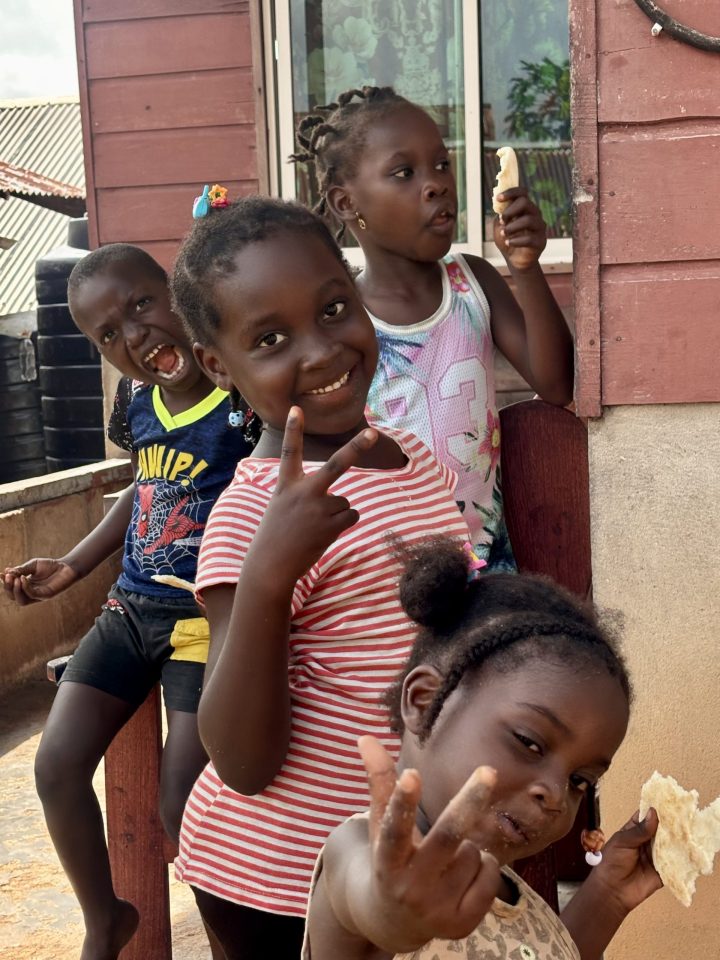
Our guide, who is also one of the village leaders, walked with us through the village and explained daily life here. Buildings such as the school and medical clinic look modern. Many houses, however, are still simple wooden homes. There is visible poverty, but what stood out most were the friendly people and the many smiling children. We did not see many locals in the village because most were working on their plantations outside the village or hunting during our visit.
Sloths around the lodge
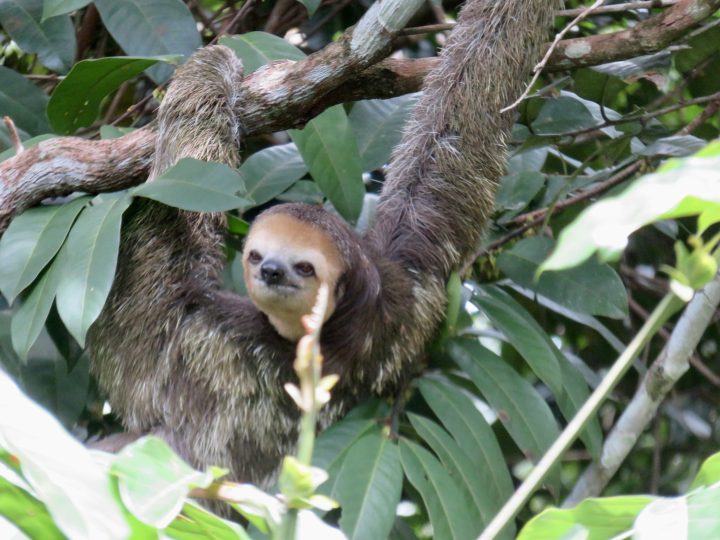
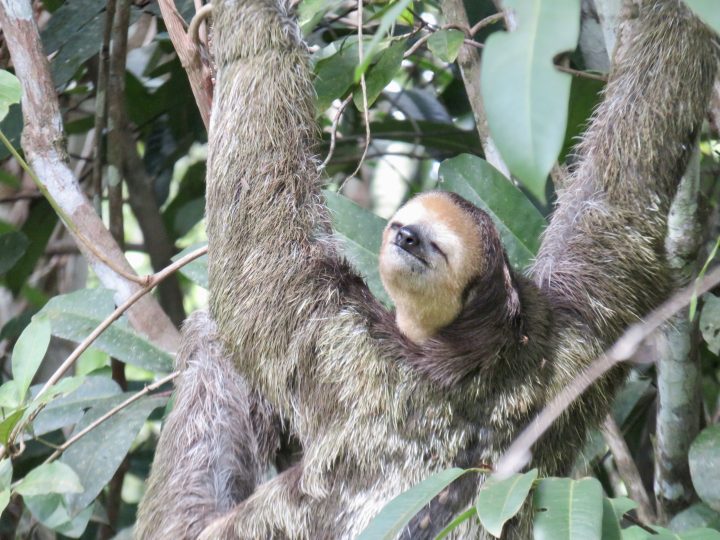
Back at the lodge we spotted a sloth high in a tree near one of the cabins. Actually two of them. Watching them slowly move through the branches was a special moment. They hardly seemed to move at all, just hanging quietly between the leaves.
The cabins are spread around the island, which keeps the atmosphere relaxed and quiet. Hammocks hang on the terraces and it is a perfect place to read a book or watch the river. I spent some time in the hammock and later cooled down in the river again between the tours.
Walk to the shaded riverbank behind the lodge. The water there feels much cooler than the swimming pool during the hottest hours.
Jungle walk and local life
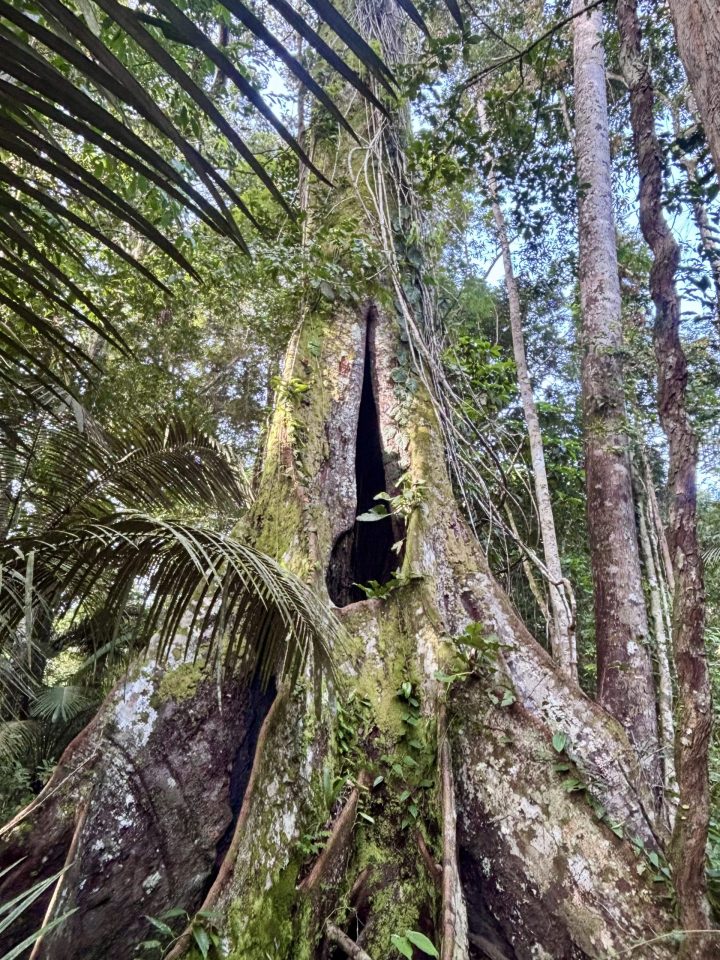
In the afternoon we crossed the river again for a walk through the forest. Compared to Seliba the focus here is more on culture and village life than pure forest. Hunting is still part of daily life for many families in this region. During the walk we saw large trees, spiders and another sloth high above us. The forest here feels thick and humid and the ground is covered with roots and fallen leaves. One tree was so big that you could walk through the opening in the trunk.
Be careful where you walk. You could step on a tarantula!!!
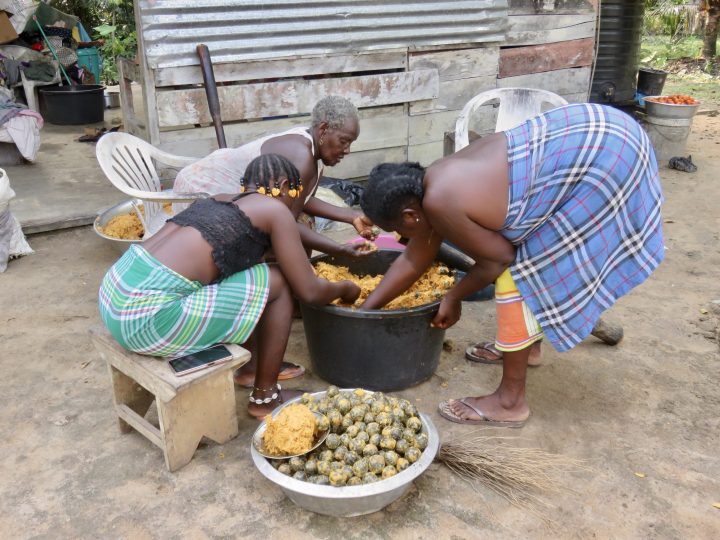
We also passed small plots where locals grow bananas and other crops. At one place people were pressing fruit into a thick orange paste. I forgot which fruit it was, but the color was bright orange and the process looked quite traditional. The fruit is pressed to produce oil. The guide also explained local beliefs. During the entire walk he carried a cashew nut in his hand which according to him protects against snake bites.
Music and dancing in the evening
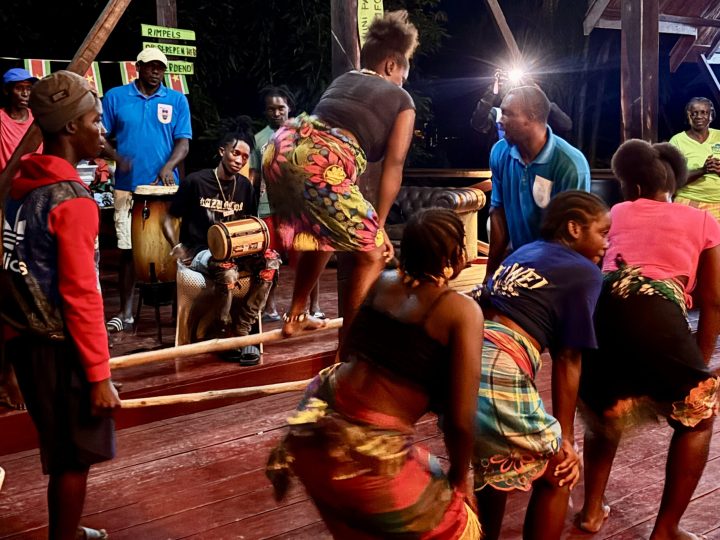
After dinner a local band arrived at the lodge. Traditional music filled the open area near the restaurant. The musicians and dancers wore colorful clothing and played rhythmic songs from the region. Guests were invited to join the dancing and the evening quickly became lively. My hips were definitely not as smooth as the local girls performing, but of course I joined. The rhythm was contagious and soon many of us were dancing along with the band. Even if dancing is not your thing, it is still fun to watch and enjoy the atmosphere.
Return to Paramaribo
The next morning we checked out around 11:00. Before departure there was still time for breakfast and even another lunch at the lodge. After saying goodbye to the lodge we boarded the korjaal again for the journey back to Atjoni.
Apply sunscreen before the boat ride. The sun on the river can be strong.
The bus was waiting and the drive back to Paramaribo took about three to three and a half hours. Around 15:30 we arrived back in Paramaribo where I checked into Hotel Familie. A comfortable return to the city after three days and two nights along the Upper Suriname River.
Practical information
Knini Paati is usually visited as a three day, two night stay. My three day, two night package cost about 345 USD at the time, including the single traveler supplement, but current prices may be different depending on the operator and season. Considering the remote location and everything that is included, I found it a good value.
Soft drinks and alcoholic drinks are not included and can be paid separately at the lodge bar. Because I came directly from Seliba there was an additional transfer fee of about 25 USD to reach the pickup point for the Knini Paati transport. It was worth it though, as it saved me a long trip back to Paramaribo first.
Knini Paati is one of the best jungle lodges along the Upper Suriname River and a great place to experience Maroon culture in Suriname. For me Seliba felt slightly more remote and untouched, while Knini Paati adds more cultural interaction and a social atmosphere with other travelers. Together Seliba and Knini Paati give a very complete impression of this part of Suriname and life along the Upper Suriname River.
Frequently asked questions about Knini Paati Suriname
How do you get to Knini Paati from Paramaribo?
Most tours include minibus transport from Paramaribo to Atjoni, followed by a korjaal boat ride to Knini Paati. The boat trip is part of the experience, with rainforest and river villages along the way.
How many nights do you need at Knini Paati?
Two nights worked well for me and gives you time for the village visit, jungle walk, caiman tour, river swimming and some quiet hammock time. Some travelers stay three nights if they want a slower pace.
What is the difference between Seliba and Knini Paati?
Seliba felt more about nature, animals and the raw sounds of the rainforest. Knini Paati felt more about culture, people and life along the river. Together they make a strong rainforest route in Suriname, especially if you want both jungle atmosphere and Maroon culture.
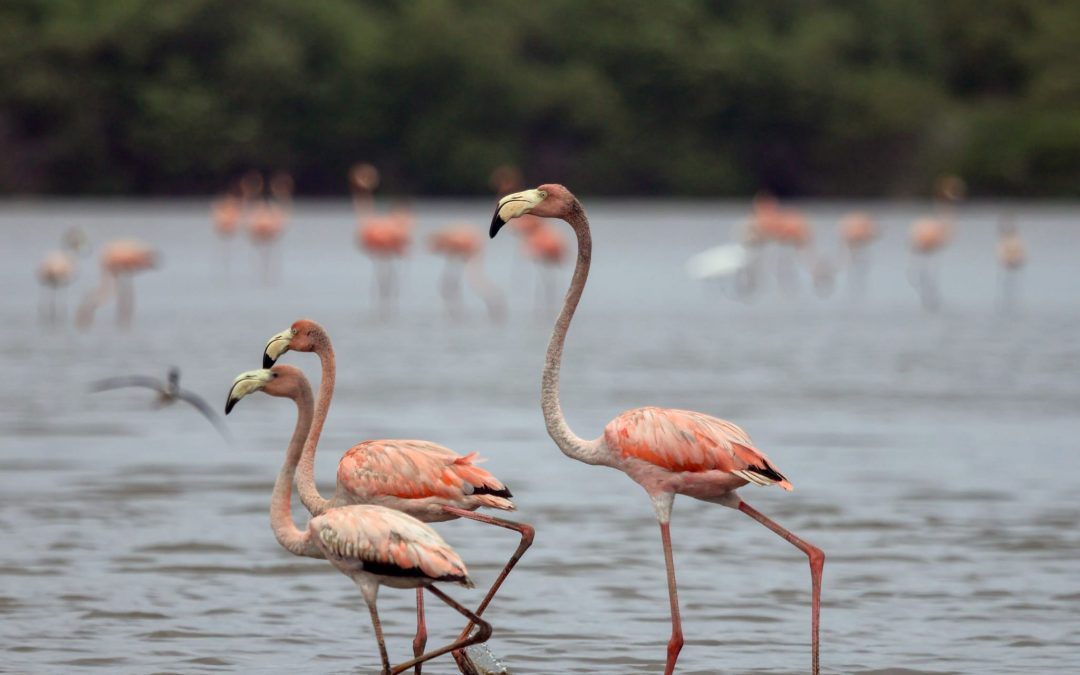
Planning to continue your Suriname route? After the rainforest and river life of Knini Paati, I returned to Paramaribo for one night before traveling on to Bigi Pan. That short city stop made the route feel much easier. Bigi Pan showed me another side of Suriname’s nature, with wetlands, birdlife and quiet water landscapes instead of jungle and river villages. I will share that experience in my Bigi Pan travel guide next.