Peru was part of my sabbatical and three months of traveling through South America. I entered the country from Bolivia, traveled from the Andes to the Pacific coast and continued north into Ecuador. This Peru itinerary follows the route I traveled myself and takes around 3 to 4 weeks, depending on how much time you spend on the northern coast. Three weeks is enough to see many of the main places in Peru, but you need to make some choices. With four weeks, you can add Lake Titicaca and spend more time along the coast without moving every second day. Peru is a big country and travel days can be long, so leave some room in your plans.
My Peru itinerary at a glance
My route started in Puno after crossing the border from Copacabana in Bolivia. From there the journey continued to Arequipa and Colca Canyon, followed by Cusco, Machu Picchu and the Sacred Valley. After the Andes came Lima, Huanchaco and finally Máncora before crossing into Ecuador. For my longer South America trip this route made sense because I did not have to return to Lima. When you fly in and out of Lima, change the order a little. I have added an alternative route further down for that.

How I traveled through Peru
I used a mix of long distance buses, night buses and domestic flights. Which one you choose depends on the distance, your budget and how much time you have. Night buses were useful on several routes. They saved a travel day and sometimes a hotel night too. Cruz del Sur was one of the bus companies I used and the comfortable seats made the long journeys much easier. For very long distances, also check flights before booking a bus. Spending a little more can be worth it when the alternative is sitting on a bus for most of a day and a night. Compare bus routes and times through 12Go before deciding.
Do not plan an important activity straight after every overnight journey. Even a comfortable bus is still a night on a bus.

Puno and Lake Titicaca: 1 to 2 nights
Puno was my first stop after crossing the border from Bolivia. The main reason to come here is Lake Titicaca, with the floating reed islands just outside the city. One or two nights is enough if the lake is your main reason for visiting. Puno is also high in the Andes, so take the altitude into account when planning the first day. For a three week Peru itinerary, Puno is one of the stops you can leave out if your schedule gets too full.
Read my Lake Titicaca and Puno guide if you want to include it in your route.

Arequipa and Colca Canyon: around 4 nights
Arequipa was one of the cities I liked most in Peru. It has enough to see for a couple of days and is also the starting point for trips to Colca Canyon. Around four nights for Arequipa and Colca together gives you time to enjoy both without arriving and leaving again immediately. In Colca Canyon I watched condors, cycled and walked through the area. The mountains and wide valley feel very different from the city. After the tour, spend another night in Arequipa instead of rushing straight to the next bus. It is a nice place for good food and a quieter day between longer travel days.
Read my Arequipa and Colca Canyon guide for my route and experiences in both places. Check Booking.com or Expedia for hotels around the historic center.

Cusco: around 4 nights
Cusco deserves more than being the place where you change transport for Machu Picchu. The old center, markets and Inca history can easily fill a few days. The city is around 3,400 meters above sea level. Give your body some time before filling the first day with tours and long walks. I stayed several days and used Cusco as part of the route to both Machu Picchu and the Sacred Valley. Around four nights gives you enough time to see the city and have a slower first day if the altitude is noticeable.
Read my Cusco guide for the places I visited and practical tips for staying in the city.

Machu Picchu: at least 1 night
Machu Picchu will probably be one of the first places you plan when arranging a trip to Peru. I stayed in Aguas Calientes the night before my visit. That made the morning much easier and meant there was no need to travel all the way from Cusco before entering Machu Picchu. Arrange this part of the trip before filling every other day of your itinerary. Once you know when you want to visit Machu Picchu, it becomes much easier to plan Cusco and the Sacred Valley around it.
My Machu Picchu guide explains how I arranged the trip and visited the site independently.

The Sacred Valley: 2 to 3 nights
The Sacred Valley deserves a little more time than a quick day tour from Cusco. I visited Urubamba, Moray, the salt ponds of Maras and Pisac. Staying in the valley meant there was no need to return to Cusco after Machu Picchu and the pace felt much better. Two or three nights gives you time to see several places without trying to fit everything into one day. It is also a quieter stop after Cusco and Machu Picchu.
Use my Sacred Valley Peru guide to choose which places fit your route.

Lima and Miraflores: around 2 nights
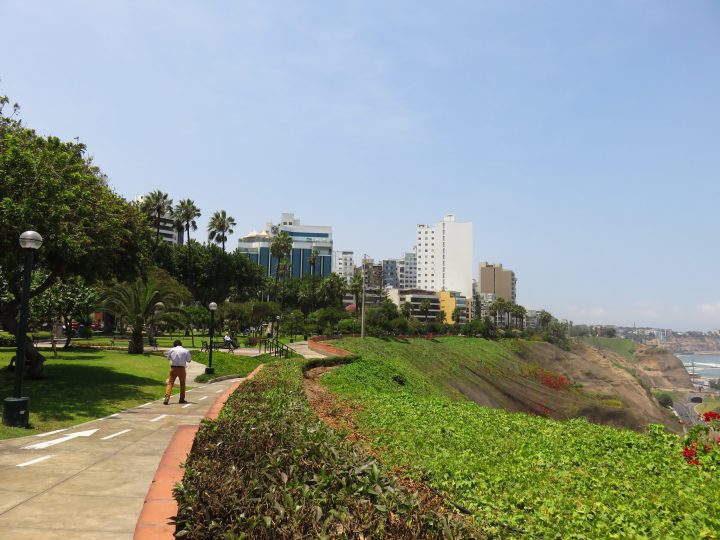
Lima was not my favorite place in Peru, but I would still include it in the route. I stayed in Miraflores, walked along the coast and had one of the best food experiences of the trip at Central. Two nights was enough for me before continuing north. For many travelers Lima will also be the place where the trip starts or ends. Use the stop to eat well, walk along the coast and have a comfortable night before another long journey.
My Miraflores Lima guide has more tips for the area, restaurants and places to stay.
Huanchaco, Chan Chan and Chicama: around 3 nights or longer
After the Andes and Lima, the northern coast gives the trip a completely different feel. Huanchaco combines surfing with ceviche, Chan Chan and the traditional Caballitos de Totora. Surfers can also continue to Chicama for its famous long left hand wave. I stayed longer because surfing was an important part of my trip. If you mainly want to see Huanchaco and Chan Chan, around three nights is enough. Add more days when you want time in the water.
The waves do not always arrive according to your hotel reservation, so surfers will appreciate some extra space in the schedule.
Read my Huanchaco Peru guide for Huanchaco, Chan Chan and Chicama.

Máncora, Los Órganos and Lobitos: 3 to 5 nights
Máncora was my final area in Peru before traveling into Ecuador. The weather is warmer here and during my stay I could surf without a wetsuit. Máncora has more restaurants, hotels and nightlife, while Los Órganos suited me better for quieter surf. El Ñuro is nearby and this is where I swam with sea turtles. Lobitos is another option when surfing is the main reason for visiting. The waves were good, but the surroundings are dry and there is not much to do away from the surf.
Allow around three to five nights for this part of the coast. My Mancora Peru guide also covers Los Órganos, El Ñuro, Lobitos and Zorritos. From Máncora my South America trip continued by bus to Guayaquil in Ecuador.

My 3 week Peru itinerary
With three weeks, I would not try to copy the complete route above. Peru is too large and you will spend too much of the trip moving between places. Start in Lima and continue toward Arequipa and Colca Canyon. From there travel to Cusco, Machu Picchu and the Sacred Valley. After the Andes, return toward Lima and choose one extra area for the final part of the trip.
Huanchaco is a good choice if you want history, surfing and ceviche. Máncora works better when warm weather and beach time are more important, although reaching the far north takes more time. Puno can be left out of this version unless Lake Titicaca is one of the main places you want to see. Three weeks sounds long when you start planning, but travel days, hotel changes and the altitude quickly take up part of that time. Keep a little room between the bigger stops.

My 4 week Peru itinerary
Four weeks gives you more choice. You can include Puno, Arequipa, Cusco, Machu Picchu and the Sacred Valley and still have time for Lima and another part of the country. If you like surfing and beach time, continue north to Huanchaco and Máncora. If surfing is not important to you, stay in the south and use those extra days for Paracas, Huacachina and the Nazca Lines instead.
This pace suited me much better. There was still time for a long lunch, an extra surf day or a morning without a plan. I saw plenty of travelers trying to fit every famous place into one trip, but that was never really my style.
Starting and ending your Peru itinerary in Lima
Most people will not enter Peru from Bolivia and leave through Ecuador as I did. When Lima is both your arrival and departure point, start there and continue south toward Arequipa. From Arequipa travel to Cusco, Machu Picchu and the Sacred Valley. Add Puno if Lake Titicaca is important and you have enough time. After the Andes, decide which part of Peru you still want to add. Head north for Huanchaco and Máncora, or stay south for places such as Paracas, Huacachina and Nazca.
Domestic flights can save a lot of time on some parts of this route, so compare them with the bus before deciding. Check 12 Go here.

What about Paracas, Huacachina and the Nazca Lines?
Many Peru travel itineraries include Paracas, Huacachina and the Nazca Lines. They fit more easily into a route through southern Peru than Huanchaco and Máncora. Huacachina is the small desert oasis near Ica that you often see in photos, surrounded by large sand dunes. Farther south are the Nazca Lines, the huge drawings in the desert that are usually seen from the air. Paracas is another coastal stop that can be combined with this route. I did not visit these places myself, so I cannot give you personal recommendations. They are useful alternatives if you have four weeks and prefer desert, nature and sightseeing over spending the final part of your trip surfing on the northern coast.

How much should you book before traveling to Peru?
Arrange Machu Picchu first when it is one of the main reasons for your trip. Once that date is fixed, you can plan Cusco and the Sacred Valley around it. Popular hotels are also worth booking ahead when your travel dates are fixed. Compare accommodation through Booking.com and Expedia, especially around Cusco, Machu Picchu and the Sacred Valley. Bus tickets can be compared through 12Go. You do not need a rental car for this complete Peru itinerary, but a car can be useful if you want to explore one area independently. Check Discover Cars and compare the cost with buses and private transfers.

Are night buses in Peru worth it?
Night buses worked well for me on several routes, mainly because they saved daytime. The better buses have comfortable seats and make long journeys much easier. Still, sleeping upright or partly reclined is not the same as sleeping in a hotel. If you know you never sleep on transport, check flights or daytime buses instead. Saving one hotel night is less useful when you spend the following day tired.

How fast should you travel through Peru?
Try not to plan Peru as a race between famous places. The altitude can make you tired, bus journeys take time and some of the best travel days are the ones where you do less than expected. A spare afternoon or an extra beach day is not wasted time. That was one of the reasons this three to four week route worked for me. There was enough time to explore without feeling that the next bus was always waiting.

FAQs about this Peru itinerary
How many days do you need for a Peru itinerary?
Three weeks is a good minimum for Lima, Arequipa, Cusco, Machu Picchu and the Sacred Valley without rushing too much. With four weeks, add Puno and choose either the northern coast or more places in southern Peru.
Is 3 weeks enough for Peru?
Yes. A 3 week Peru itinerary gives you plenty of time if you make choices. Trying to include everything from Lake Titicaca to Máncora will make the trip much faster.

What is a good route for a first trip to Peru?
Lima, Arequipa, Cusco, the Sacred Valley and Machu Picchu make a strong first route. Add Lake Titicaca, Huanchaco, Máncora, Huacachina or Nazca depending on the time you have and what interests you most.
Let Me Inspire You Takeaways
A Peru itinerary of 3 to 4 weeks gives you enough time to see very different parts of the country. Three weeks works best when you focus on the south and Andes and choose one extra area. Four weeks gives you more room for Lake Titicaca and either the northern coast or places such as Huacachina and Nazca. Do not underestimate the distances. Use buses when the route makes sense, fly when it saves a lot of time and leave some empty space between the bigger activities.
This route was part of my longer South America sabbatical, so change it to fit your own starting point and travel style. Before you start booking the trip, read my Tips Before You Travel to Peru for the practical things that are useful to know before you go.