Taking the ferry from Suriname to Guyana sounds simple on paper. You travel to Nieuw-Nickerie, continue to South Drain, cross the river by ferry, arrive at Moleson Creek in Guyana, and then take a minibus to Georgetown. In reality, this is one of those travel days where you should leave some breathing space in your itinerary. The route works, and it is a useful overland crossing if you are already in western Suriname or coming from Bigi Pan. But it is not a route I would plan right before an important flight.
I stayed one night in Nieuw-Nickerie before the crossing, which I would definitely recommend. It gives you a calmer start in the morning, especially because the ferry process begins early and involves arranging the transfers, immigration forms, waiting time, passport checks and a bit of border uncertainty. That uncertainty became very real for me when the ferry had technical problems and did not go on my planned crossing day. I ended up spending an extra day in Nickerie while I had flights lined up in Guyana. Not ideal, but also very useful to know before you plan this route yourself.
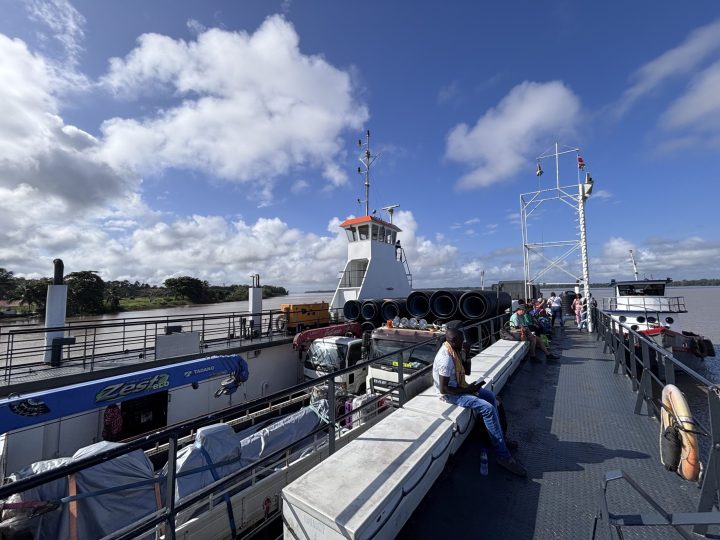
If you take the ferry from Suriname to Guyana, do not plan your next flight too tightly. Add at least one or two buffer days if your schedule allows it. Another option is to return to Paramaribo and check flight options to Georgetown or your next destination.
A night in Nieuw-Nickerie before the ferry
Nieuw-Nickerie is not a town where I would plan several days, but as a stop before the Suriname Guyana ferry it makes sense. You can arrive in the afternoon, check into your hotel, walk around the center a little, buy anything you still need and keep the evening easy before the early crossing. This is also the moment to arrange your transfer for the next morning. My hotel in Nickerie helped me with it. Nieuw-Nickerie is small, and many people use this town before crossing the border to Guyana, so the hotel knew who to call. One phone call to the right local contact was enough, and the transfer was arranged.
Ask your hotel in Nickerie to help arrange the ferry transfer to South Drain before your crossing day. This is much easier than trying to figure it out yourself early in the morning.
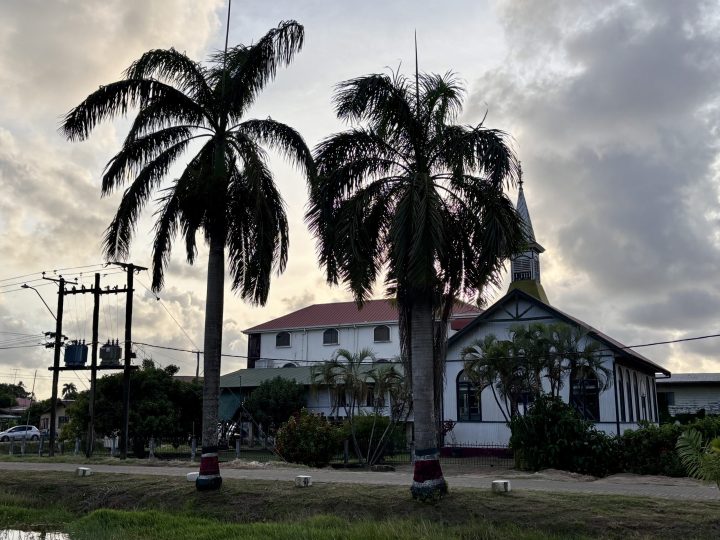
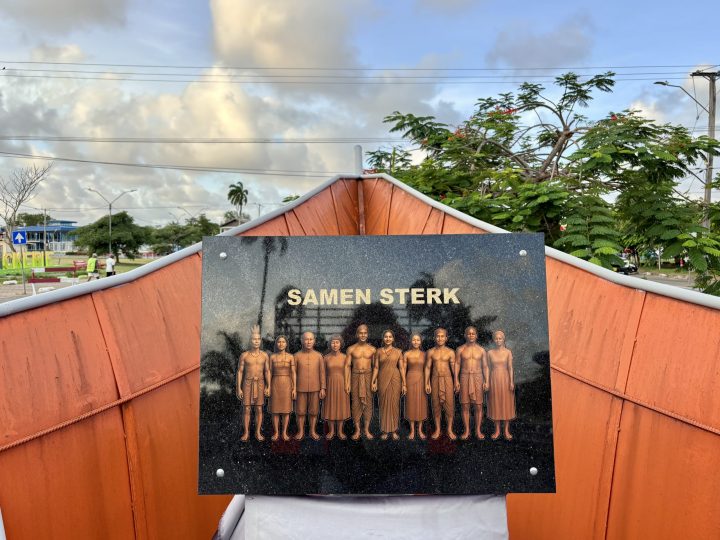
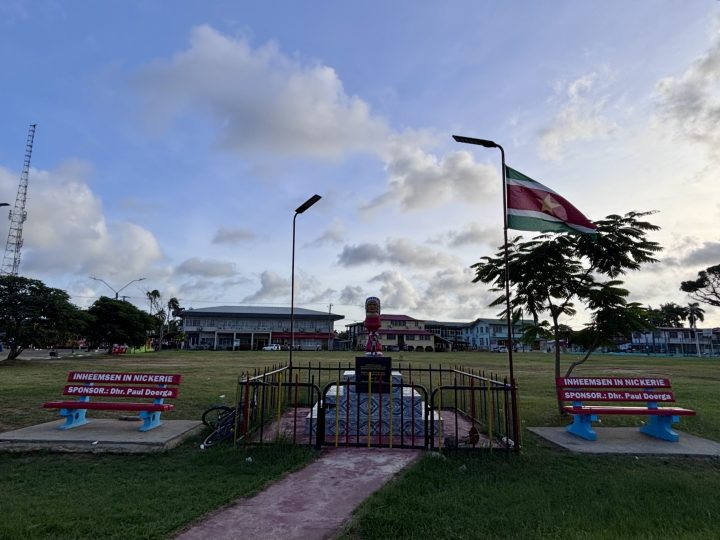
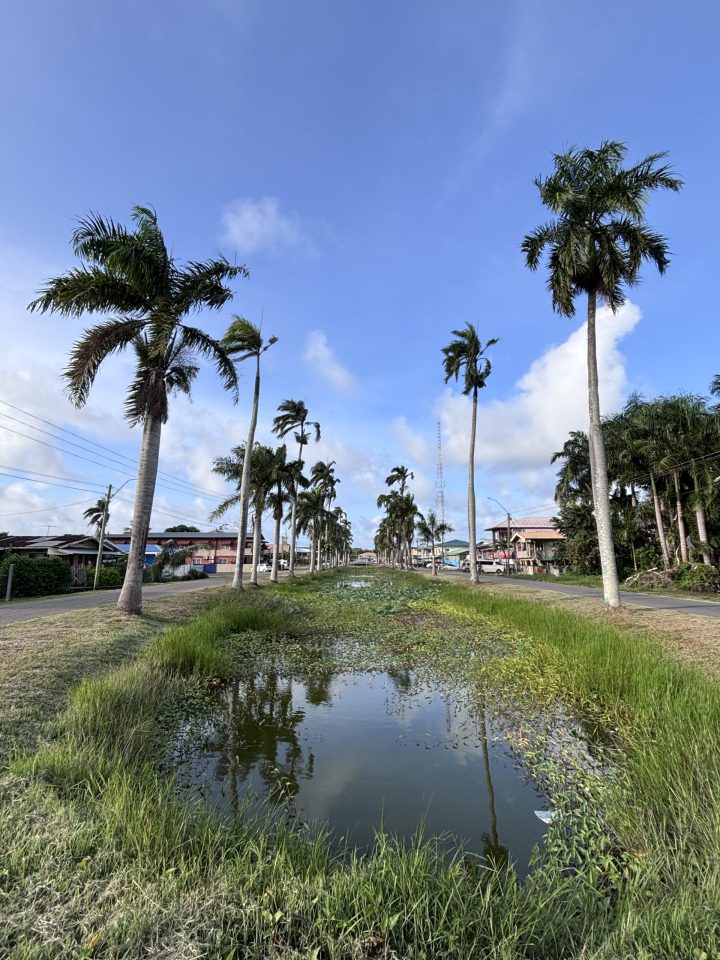
The town itself feels calm and small. The park and football field form a clear central point, with some shops and simple places to eat nearby. You can pass the church, have a quick look at Nickerie market and see the monument Samen Sterk, which is shaped like a boat. That symbol fits this border town well, because everything here feels connected to water, movement and crossing from one place to the next. There is also some history behind Nieuw-Nickerie. It became the new district center after older Nieuw-Rotterdam was lost to the sea in the 19th century. You do not need a full sightseeing plan here, but a short walk gives you enough context before the next travel day.
Where to stay in Nickerie before the border crossing
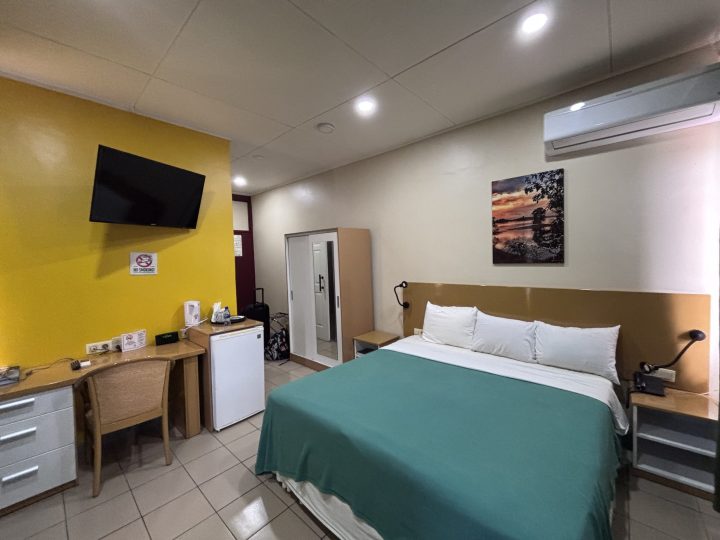
There are not endless Nickerie hotels to choose from, so I would keep it simple and stay somewhere central. For me, Residence Inn was the clearest option in town. It is close to the park and football field, my room was clean and comfortable, and I even had a very nice new shower, which felt very welcome after a long travel day. I paid around USD 70 including breakfast. For one night before the ferry, that felt fair. What I appreciated even more was the flexibility when the ferry did not go. I could immediately book an extra night in the same room, which made a stressful travel delay a little easier to handle.
Book your Nickerie hotel before you arrive, especially if you are crossing the border the next morning. This is not the place where I would want to walk around with luggage comparing hotel options.
When the ferry from Suriname to Guyana does not go
My plan was simple. Sleep one night in Nickerie, take the ferry the next morning, and continue to Georgetown. But the boat had technical problems, and suddenly I was stuck for another day in Nieuw-Nickerie instead of being in Guyana. That extra day was not my favorite travel memory. I had flights lined up in Guyana to Kaieteur Falls and the day after even to Tobago, so there was not much room in my itinerary. On top of that, I was not feeling great either, and Nickerie is not exactly a town full of distractions. The hotel staff were helpful, which made a difference. In the end I just stayed put, waited for the next crossing and kept things as simple as possible. Sometimes a travel day is just a write-off, and the best thing you can do is accept it.
Keep your border crossing day flexible. If the ferry is delayed or canceled, your hotel is usually the best first place to ask for help and local updates.
How to take the ferry from Suriname to Guyana via Nickerie
Before you leave Suriname, make sure you complete the Suriname Immigration and Customs departure form online. You need this when leaving the country, and it can be filled in within 7 days before departure. You also need to complete the Guyana immigration form (e-Ticket) before entering Guyana. This should be submitted within 72 hours before arrival. I would not leave it until the last minute, especially if you are taking the ferry early in the morning.
Fill in both forms before your crossing day and save the confirmations on your phone. Screenshots or offline copies are useful, because border Wi-Fi is unreliable.
Luckily, the ferry did run the next day. I was picked up early from the hotel, around 6:00 AM, because this crossing starts long before the boat actually leaves. In my case, it all felt very early. From memory, the boat even left earlier than the current official schedule, which is usually around 9:00 AM. A few other passengers were picked up too, and then we drove to the river near South Drain, where the boat departs. If you arrange your transfer through your hotel or a local driver, check clearly what is included, because the transport and ferry ticket can be bundled in different ways.
I paid the driver USD 20 for the transfer package, which included the bus and the boat. The ferry ticket itself is usually around USD 20 one way, but what you pay in total can depend on how your transport is arranged. The driver also knew the driver on the Guyana side who would continue to Georgetown, so I could arrange that at the same time. I paid GYD 5,000 (approx. USD 23) for the ride from the border to Georgetown, paid through him, and exchanged my last Surinamese money as well. That was practical, because otherwise I would probably have been left with cash I would never use again.
Keep some small cash with you, but do not overthink the exchange rate too much if you only have a little money left.
Immigration and the ferry ride
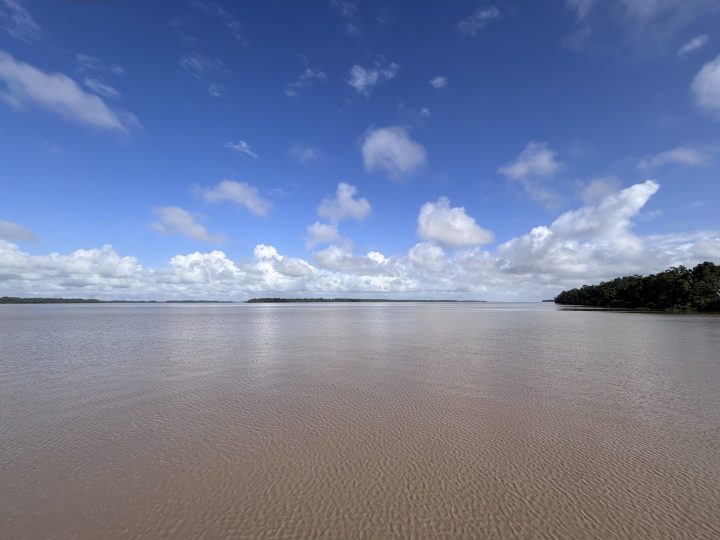
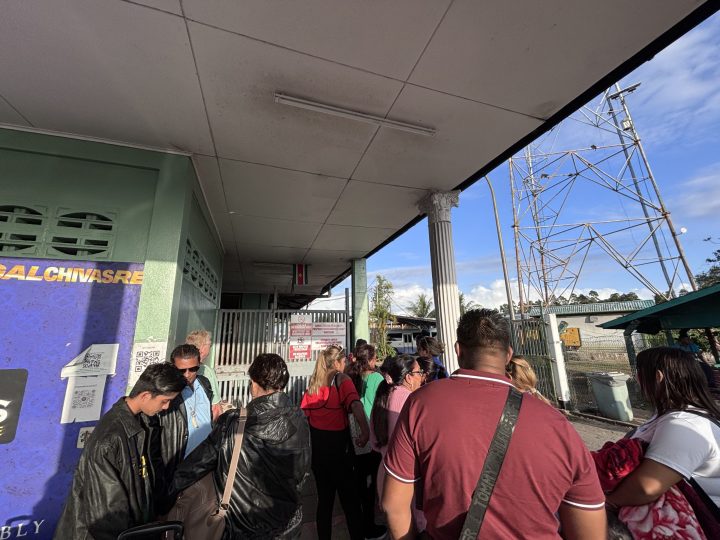
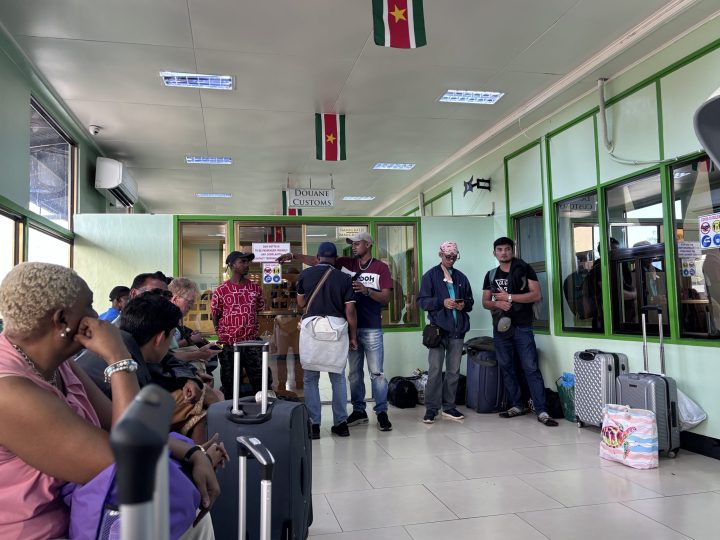
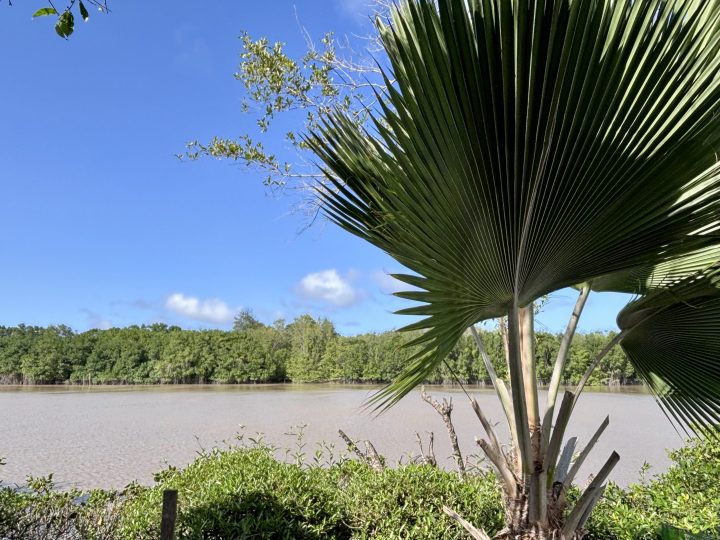
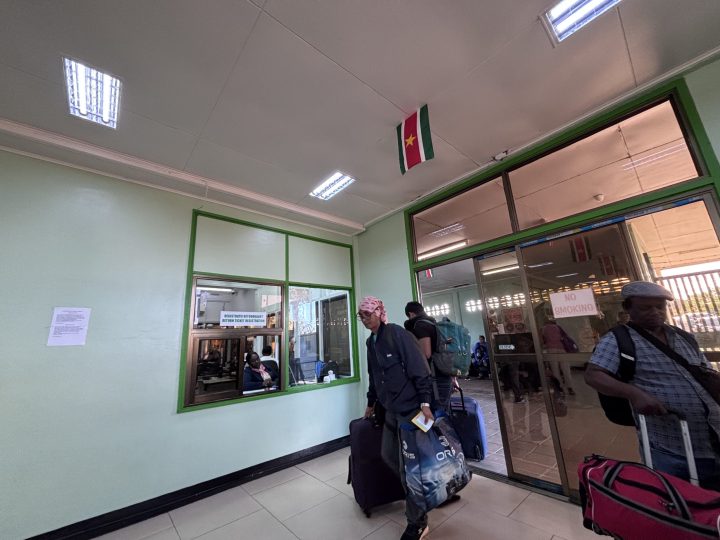
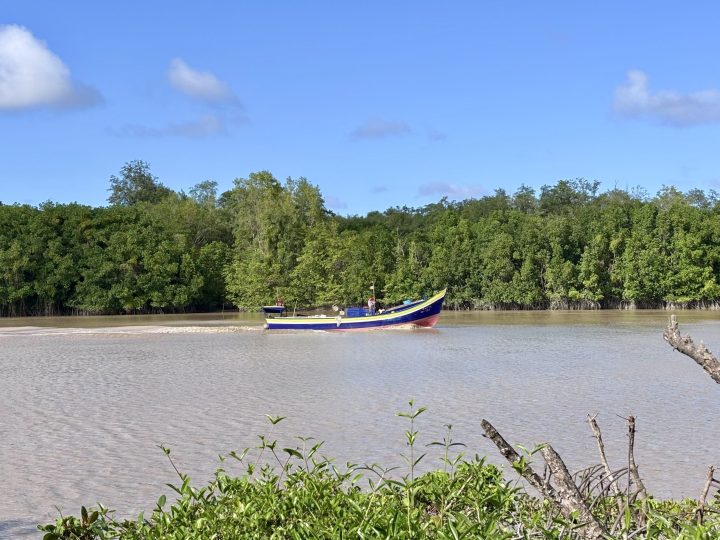
On the Suriname side, I had to hand over my passport at immigration and got it back later. I always find that a bit uncomfortable, but it seemed to be part of the routine. In the end, it all went fine. After that you wait, board the boat, and take your luggage with you. The ferry ride itself is short and takes less than an hour. After all the waiting and uncertainty, it suddenly feels quick. I liked seeing Guyana on the other side of the brown river already. It made the next country feel very close. On the Guyana side, the Guyana Suriname ferry arrives at Moleson Creek, where the process starts again. I had to hand over my passport there too and wait until my name was called. That also felt a little strange, but what stood out more was that they asked for my yellow fever proof.
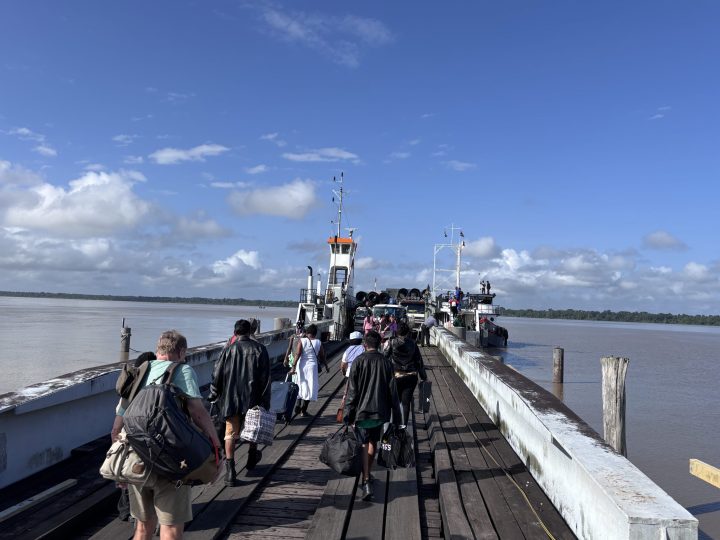
Bring your yellow fever certificate when you travel from Suriname to Guyana. I was asked for it on arrival in Guyana.
From Moleson Creek to Georgetown
After immigration, the minibuses were already waiting outside to continue to Georgetown. That part felt easy after all the uncertainty around the ferry. Once I was finally sitting in the bus, I mostly felt relieved that the route was working again and that my trip had not completely fallen apart. The drive to Georgetown still takes a few hours, so the day is not over once you step off the boat. Bring water, snacks and a little patience. But the hardest part is behind you then. After quiet Nieuw-Nickerie and the muddy border crossing, Georgetown feels like a real next step in the trip.
FAQ about the Nickerie border crossing
How long is the ferry from Suriname to Guyana?
The ferry ride itself takes less than an hour. The full crossing takes much longer because of transfers, waiting time and immigration on both sides.
Where does the ferry from Suriname to Guyana depart from?
The ferry departs from South Drain in Suriname. From there, it crosses to Moleson Creek in Guyana. From Moleson Creek, you can continue by minibus to Georgetown.
How much does the Suriname to Guyana ferry cost?
I paid USD 20 for my transfer package from Nickerie, which included the bus and the boat. My hotel helped arrange this locally. From Moleson Creek to Georgetown, I paid 5000 GYD, which was around USD 23 at the time.
What documents do you need for the Suriname to Guyana ferry?
Bring your passport, Suriname departure form, Guyana immigration e-Ticket and yellow fever certificate. I was asked for my yellow fever proof on arrival in Guyana.
What happens if the ferry from Suriname to Guyana is canceled?
Then you wait for the next crossing and ask your hotel or driver for updates. This happened to me, so I would not plan an important flight too close after this border crossing.
Let Me Inspire You Takeaways
The Nickerie border crossing was not the most beautiful part of my trip, but it was part of the real journey. An extra day in a sleepy town, some stress about flights, a short ferry over a brown river, and then the relief of making it across after all. It is not a glamorous travel day, but it is a useful route if you want to travel overland from Suriname to Guyana. Stay one night in Nickerie, fill in your forms before the ferry day, keep some cash with you, bring your yellow fever certificate and avoid planning your next flight too close. That is also travel.
Heading to Georgetown next
Once you cross into Guyana, Georgetown feels like a different world again. After a slow day around the border, it is nice to arrive somewhere with more movement and a new energy. For me, that really felt like the start of the next chapter. But perhaps you are traveling back from Bigi Pan toward Paramaribo!