In this Sicily travel blog, I take you through the southeastern part of the island, one of the most interesting regions to combine history, beautiful towns, good food and time by the sea. This part of Sicily is known for its impressive Baroque architecture, especially in Noto, Modica and Ragusa, which were largely rebuilt after the devastating earthquake of 1693. My route also included Syracuse and Ortygia, where Greek history, Baroque buildings and everyday Sicilian life all come together in a compact historic center. And because I rarely travel around an island without finding the beach, I also stopped in the fishing village of Marzamemi.
Below you can follow my route through Southeast Sicily, including the places I visited, where I stayed, restaurants I tried and practical tips for planning your own trip.
Wak the streets of Syracuse & Ortygia
From my accommodation in the Etna area, I drove south towards Syracuse, around 70 km away. The historic center is located on the small island of Ortygia, connected to the mainland by bridges.
Whenever I have enough time, I prefer the scenic roads over the highway. The drive takes longer, but you see much more of Sicily along the way.

Ortygia is one of those places that is best explored without too much of a plan. Leave the car near the northern side of the island and continue on foot through the small streets, squares and alleys. The center is compact, so you can easily see the main sights while still having time to stop for coffee, lunch or a granita. The architecture immediately gives Ortygia a very different feel from the beach towns along the coast. You will see layers of Greek, Roman and Baroque history almost next to each other, mixed with balconies, old mansions, small shops, cafés and restaurants.

By the time I arrived it was lunchtime, so my first stop was the well-known Fratelli Burgio. I ordered a tagliere, a wooden sharing platter filled with different small bites. I chose the fish version, which was a good way to try several local flavors without ordering a full meal.
From here, continue through the old streets towards Piazza del Duomo, one of the highlights of Ortygia. The square is surrounded by elegant pale buildings, with the Cathedral of Syracuse as its centerpiece. What makes the cathedral particularly interesting is its history. It was built around the remains of an ancient Greek Temple of Athena, and you can still see some of the original columns incorporated into the building.


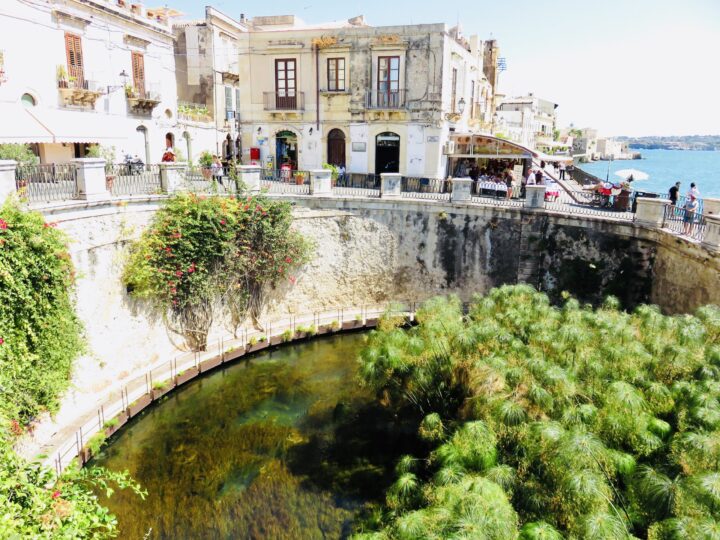
After Piazza del Duomo, walk towards the waterfront and Fonte Aretusa. This freshwater spring sits only a few meters from the sea and is famous for the papyrus plants growing around it. Fish and ducks swim in the water, while just behind it you have views across the harbor and Mediterranean. One of the nicest things about Ortygia is simply continuing along the waterfront and then disappearing back into the narrow streets. There are several small spots where you can get close to the clear blue water, which was particularly tempting when I visited at the beginning of September. It was still very hot.
That called for another Sicilian essential: granita. I stopped at Gelateria Gusto on Via Roma for one before continuing my walk through the center. Granita is somewhere between sorbet and crushed ice, but with a softer crystalline texture. On a warm Sicilian afternoon, it is exactly what you want.

With granita in hand, I continued towards Piazza Archimede, where you will find the ornate Fontana di Diana in the middle of the square. From here I slowly made my way back through the streets towards the northern end of Ortygia, where I had parked the car.

You can see the main sights of Ortygia in a few hours, but I would not rush it. The charm is just as much in wandering around, stopping for food and looking down the side streets as it is in ticking off the main monuments.
Where to Stay and Eat near Noto
Time to jump into the water to cool off, I random stopped at Lungomare Tremoli near Avola. Then drove to San Lorenzo to find accommodation, but hard to find something what I liked in my budget. Had a drink at a cool beach place called Lido Agua Beach. Searched the web and ended up at Agriturismo Le Zagare di Vendicari for the night including breakfast . I liked it here, they didn’t speak English, but the room was nice and the facilities even more! Big pool with the gardens and farm fields all around.


Close to Marzamemi and Noto next to the Natural Reserve of Vendicari. I was tired of entire day and stayed at the Agriturismo for dinner, which was a very good choice! Romantic tables with candles outside on the terrace and the food was very very good; ravioli with pistachio pesto, parmigiana di melanzane and almond pudding. Loved it here! Breakfast was very extended, perfect base to continue my journey to Noto.
Visit the Baroque buildings in Noto
Noto was rebuilt after the earthquake of 1693 to another Sicilian Baroque village. Most of the buildings have these golden, yellow brownish sandstone color, same for the Basilica Cattedrale di San Nicolò. You pass baroque Palazzo Castelluccio, Basilica Santissimo Salvatore and churches like San Domenico and San Francesco.

All feast for the eyes! Loved to stroll around and admire the architecture of these impressive buildings. More to come in Modica and Ragusa. Time for a coffee break at Dolceria Costanzo. It was another hot day, a cold coffee granita tasted perfect! Time to drive to Marzamemi via the SP19.

Chilling in Fishing Town Marzamemi
I like to combine things on my holiday, culture but also beach and chill time. The weather is great and temperatures in the high twenties. Time to chill at the beach a for couple of hours in Marzamemi. For couple of EURs you can park your car in the center close to the beach. I looked for a free and quiet spot next to the rocks in the white sand. A lot of seaweed in the water, but still amazingly blue and clear. Love it!

Marzamemi is a fishing town full of colorful restaurants, cafes and shops. Loved the vibe here. Had a popular dish here the fried calamari and verdures at Fritti in un Coppo for lunch but later I saw more appealing places to eat to around the Piazza Regina Margherita. The local harbor is full of colorful boats, perfect stroll in the sun back to the car.


Culture and Chocolate in Modica
After my beach time I drove to Modica, my last stop for the day. It was already a culture day in Noto but didn’t want to miss Modica. Driving through the agricultural area, with limes, wines and many other crops. The Sicilians use every part of the ground to grow something. Passing Ispica on to Sicily’s most distinctive town Modica. Modica consist of two centers, alta and bassa in English, upper and lower. It is situated between two narrow valleys, which makes it unique.

To explore Modica take the Trenino Barocco (historical train), indeed very touristic, but you don’t have to walk all the way up and that for only 5 EUR.

Perfect for me after a long day, left with the 16:00 train, which goes every hour. During the train ride they play a tape with explanation of the historical building you pass, even in English. You visit 10 of the most historical highlights of Modica; like the masterpiece Duomo San Giorgio located on top of a 250-steps staircase and Chiesa San Pietro.


Take the train up and walk back, I stopped on the way back at Church San Giorgio and walked down to the departure point on the main street Corso Umberto I.
Next to the impressive baroque churches, Modica is also famous for the grainy chocolate. The use and ancient method to make the chocolate, which you can buy at Antica Dolceria Bonajuto. This is Sicily oldest chocolate factory. You can get the chocolate in many flavors. So, if you like chocolate like me this place is a must do; and do is, buy and eat the chocolate!

Where to Stay and Eat in Modica
I booked my accommodation for one night at Modica Old Town Rooms in the middle of the center of Modica next to Chiesa del Carmine. The entrance is dark and narrow, but the rooms are fresh and clean with a perfect shower; I even had a small French balcony with a nice view!
Check the currents rates of accommodation in Modica here.
I went for the best pizza del giorno at Egopizza close to my accommodation, which they recommended to me and even got a discount of 10%. There are a lot of restaurants in Modica; which got a lively center in the evening when it gets a bit cooler. Great vibe here!

After visiting the Duomo San Giorgio in the afternoon, get a cocktail at this great bar on the hill with great view; Gli Orti di San Giorgio. Great atmosphere and the cocktails are the best, perfect for an apritive!
Strolling in Ragusa Ibla
From Modica, it is only a short drive to Ragusa, another of the beautiful Baroque towns of southeastern Sicily. Ragusa is divided into two parts: the newer Ragusa Superiore and Ragusa Ibla, the historic old town built across the hillside. For me, Ibla was definitely the part to explore.

The old town is compact, but because it is built on a hill, expect plenty of steps and streets going up and down. This is also what makes it so enjoyable to explore. Small houses, balconies, churches and hidden corners appear between the narrow streets, while little piazzas give you an excuse to stop for a coffee or something sweet. Ragusa Ibla is part of the UNESCO-listed Late Baroque Towns of the Val di Noto, together with places such as Modica and Noto.
Take some time to wander without following a strict route. This is a town where getting slightly lost between the streets is part of the experience. You can stop on one of the piazzas for an espresso and a Sicilian sweet, preferably with a view of the Duomo, before continuing downhill.

On my way back towards the car, I followed Corso XXV Aprile towards Giardino Ibleo, the public garden at the eastern end of Ibla. It is a peaceful place to finish your walk, with palm-lined paths, fountains and churches surrounded by greenery. You also get lovely views across the surrounding countryside from this side of town.

After Syracuse, Noto, Modica and Ragusa, I had seen enough Baroque churches and piazzas for a while. Beautiful as they are, Sicily was calling me back to the coast. From Ragusa, I continued towards the southern Mediterranean coast of Sicily, where ancient temples, beaches and a completely different side of the island were waiting.

Continue your journey to the Valley of the Temples, Scala de Turkish and Selinunte like me or to Catania, Taormina and Etna area?