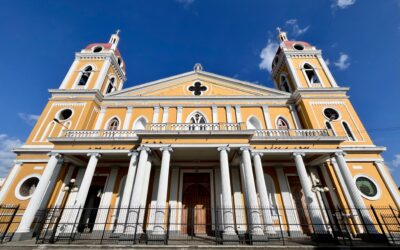
Arequipa was one of those cities I liked almost immediately. The white volcanic stone, colonial streets, good cafés and the volcanoes Chachani, Misti and Pichu Pichu in the background give the city a relaxed atmosphere. Add a trip to Colca Canyon and you have a great combination of city, culture and nature. For me, Arequipa was the perfect stop between Puno and Cusco. Take some time for the city itself before heading into the mountains. The Colca Canyon tour was the big adventure here, but I was glad I also planned time to enjoy Arequipa itself.
Getting to Arequipa Peru
My route continued from Puno to Arequipa by long-distance bus. The journey takes around six hours and is an easy connection between the two cities. Flying doesn’t make much sense on this route. Puno uses the airport in Juliaca and there are no direct flights to Arequipa, so the bus is often the easier choice.
You can compare buses from Puno to Arequipa with 12Go. Check the seat categories before booking, I would choose a VIP seat for a journey of several hours, the extra space is worth it!
After Arequipa, my next destination was Cusco. I took a night bus and this one was warm, winding and bumpy. Sleeping wasn’t really happening. A night bus saves a hotel night, but don’t automatically count on eight hours of sleep. You can compare buses from Arequipa to Cusco with 12Go before deciding between a day or night journey.

How many days in Arequipa Peru?
I would plan around four days for Arequipa and Colca Canyon together. Give yourself about two days for Arequipa itself and another two days for the Colca Canyon tour. That gives you enough time for Santa Catalina, Plaza de Armas, the markets, cafés and restaurants without rushing through the city. Then you can leave for Colca Canyon and spend two full days in the mountains. If your Peru itinerary is tight, you can shorten Arequipa to one full day before the Colca tour. I wouldn’t skip the city completely though. Arequipa was one of those places where I enjoyed just walking around, stopping for coffee and looking at the old buildings.

Things to do in Arequipa
Arequipa is known as the White City because many of its historic buildings are made from white volcanic stone called sillar. The historic center has been a UNESCO World Heritage Site since 2000, and around Plaza de Armas you quickly see why. Start at the square with the cathedral and the volcanoes in the background. Continue through the streets around the center, visit Plaza and Iglesia de San Francisco and take some time for the artisan markets. I love looking for local products and souvenirs, although my suitcase usually prefers that I don’t. Calle Mercaderes gives you a more modern side of Arequipa with shops, while the smaller streets around the historic center are better for walking, coffee and old buildings. You don’t need a packed sightseeing schedule here. Walking around was part of what I liked about Arequipa.

Visit Santa Catalina Monastery
Don’t skip the Monasterio de Santa Catalina. This was my favorite cultural sight in Arequipa and it really does feel like a small city inside the city. The monastery covers around 20,000 square meters and is divided into streets, courtyards and different living areas. Walk through the Orange Cloister, old kitchens and rooms and look at the murals, bright walls, flowers and cacti along the way. The monastery was founded in 1579 and you can easily spend a couple of hours here without noticing the time.

The red and blue walls against the volcanic stone make Santa Catalina a beautiful place to photograph. Every corner seems to have a different color or detail. Even the plants and cacti fit perfectly between the colorful walls and old stone. Entrance for a foreign adult is currently S/50, around USD 15. A guide is optional and costs extra. Check the entrance price again before your visit because exchange rates and fees can change.

Arequipa Peru elevation
Arequipa is located at around 2,335 meters above sea level. My body was already used to altitude after traveling through Bolivia and Puno, so I didn’t have problems here. If you arrive from the coast, Arequipa can be a good place to slow down before continuing higher into the Andes. Cusco sits at around 3,400 meters, so spending a couple of days in Arequipa gives your body a more gradual step up before the next part of your Peru trip. Colca Canyon is another story. Parts of the road go much higher, so even when you feel fine in Arequipa, you can still notice the altitude during the tour.
My 2-day Colca Canyon tour
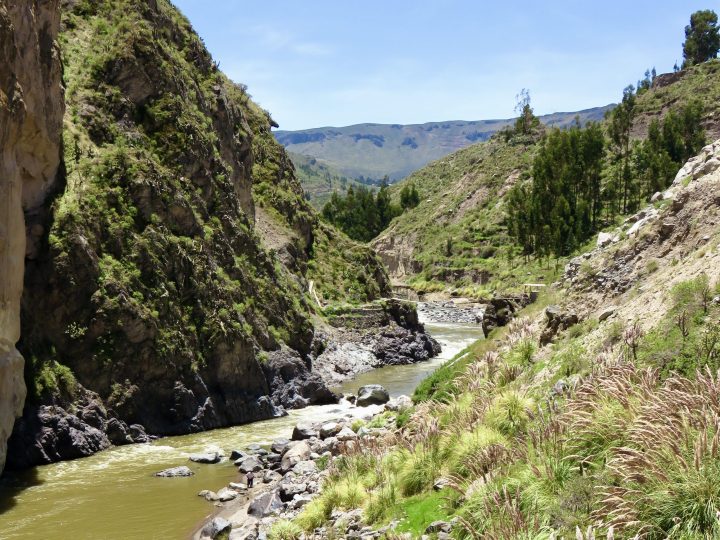
Colca Canyon is northwest of Arequipa and is one of the deepest canyons in the world. But the trip is about much more than the canyon itself. You travel through high Andean plains, traditional villages and agricultural terraces, with volcanoes all around you. Along the route you can see vicuñas, alpacas and llamas, while peaks such as Chachani, Ampato, Sabancaya and Hualca Hualca shape the landscape. If you search online, you may see Colca Canyon tours for around USD 25–30. These are usually long full-day tours from Arequipa. They start very early and return to the city the same day.

A basic shared 2-day Colca Canyon tour can start from around USD 40–60. Tours with better accommodation, more meals, smaller groups or extra activities are often closer to USD 60–120 or more. Private and premium trips can cost considerably more. Compare what is included instead of choosing only by the lowest price. The Colca tourist ticket is separate on many tours. The current foreign adult price is S/70, around USD 20–21. Hot springs and some meals may also be charged separately. I chose Colca Trek because their tour was different from many of the standard packages. It cost more, but included a comfortable lodge, meals, smaller-scale transport and, most importantly for me, a biking section. I’m Dutch, so getting on a bike sounded like a good idea. I just forgot that I normally cycle on very flat land.
If you stay in Arequipa before the tour, you can also visit the Colca Trek travel agency at Jerusalén 401-B in the historic center. Ask about the different trips when you arrive and reserve the one that suits you. This also makes it easier to check exactly what is included instead of relying on an old or unclear website.
Day 1: Into the Colca Valley
We drove around Chachani and stopped at the Choqolaqa Rock Forest. Here we drank coca tea and walked for about an hour through the rocky landscape. Coca tea is something you see everywhere in the Andes and is traditionally used when people feel the effects of altitude. I drank it regularly while traveling at higher elevations. Taking things slowly, drinking enough water and listening to your body are still important.

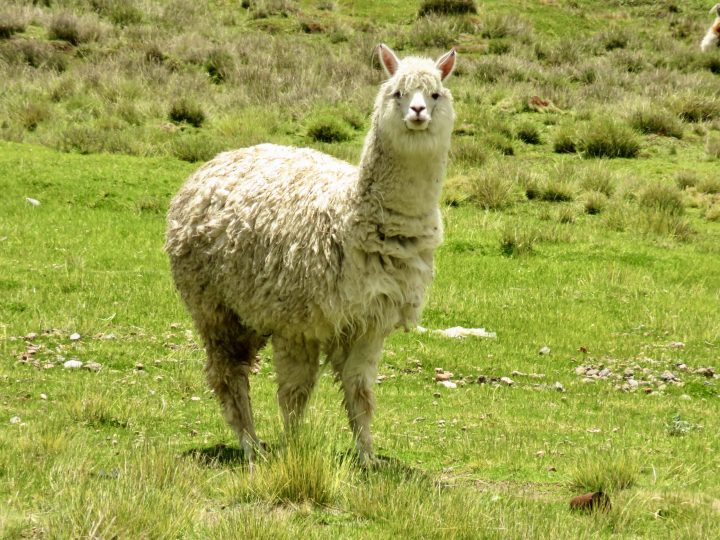
Higher up, the landscape opens into plains with vicuñas, alpacas and llamas. Water, yellow grass, mountains and volcanoes made this one of those parts of the drive where I kept reaching for my camera. The highest point of my route was around 4,910 meters. You definitely feel that altitude. Walking a short distance suddenly takes much more energy and I noticed the lack of oxygen quickly.

Take it slowly at the highest viewpoints. Drink water, don’t rush around for photos and tell your guide if you feel dizzy or unwell.

After lunch in Chivay, we continued past viewpoints over the agricultural terraces of the Colca Valley. Later we walked around Pinchollo before arriving at Colca Trek Lodge.

The lodge was exactly what I needed after a full day outside. A comfortable room, a great view over the valley and dinner with local ingredients were followed by an evening around the fireplace with the other travelers. I didn’t need much convincing to go to bed early.

Day 2: Biking and condors
The next morning started early. Staying close to Cruz del Condor meant we could get there before most of the larger tour groups. Morning is usually the best time to watch the condors as the air warms up around the canyon. Only one problem: no condors. Instead of waiting around, we got on the bikes. The route was around 15 kilometers downhill with a short uphill section. Downhill at this altitude was great. The uphill kilometer was hell.

My lungs were burning and my legs had absolutely no interest in cooperating. I live below sea level, remember. Still, cycling through the Colca landscape was one of my favorite parts of the whole tour. After reaching Cabanaconde, the bikes went back onto the vehicle and we returned to Cruz del Condor. This time we were lucky!! Four condors appeared above the canyon and slowly moved higher on the warm air. After seeing nothing earlier that morning, watching them fly above the canyon was worth coming back for.

They came close enough to really see how large they are. This is still one of the moments I remember most clearly from Colca Canyon.

Hot springs and the road back
The return journey included more viewpoints and small villages. At Choquetico we stopped for another view over the valley and I tried tuna, the fruit of a cactus, as a snack.

In Yanque you see local women wearing traditional clothing and different styles of hats from the Colca Valley. The colorful clothes are something I still remember clearly from this part of Peru. Then came the hot springs at La Calera. The warm water felt very good after cycling, although the pools were busy with both tourists and locals when I visited. La Calera is normally paid separately from the Colca tourist ticket. Expect around USD 4–6, but check what your tour already includes.
After the included lunch in Chivay it was time for the long drive back to Arequipa. The weather changed from sun to mist and rain, and I slept through part of the journey. After two days at altitude, walking, biking and looking for condors, I was done.

If Puno is your next destination, ask whether your Colca tour can take you directly toward Puno instead of returning to Arequipa. This can save an unnecessary journey back to the city.
Where to stay in Arequipa
Casona Solar was a good choice for my stay in Arequipa. The colonial building has large rooms and a quiet garden, while Plaza de Armas and the main sights are within walking distance. Coming back to the garden after exploring the city was a nice break from the busy streets. For a short stay, I would choose the historic center again. You can walk to Santa Catalina, restaurants and cafés without constantly arranging transport.

You can check Casona Solar and other hotels in Arequipa on Booking.com. Location would be one of my main filters here.
Where to eat and drink in Arequipa
Peruvian food is one of my favorite cuisines in the world, and that is already a good reason to visit Peru. Arequipa also has its own strong food culture and is known for traditional picanterías, where regional Arequipeña dishes are served.
Crepísimo was packed when I visited, but the coffee and crêpes made the stop worthwhile. Nutella won my vote, although there are enough other choices if you have more self-control.
Next door, Chaqchao Chocolates is a good stop if coffee and chocolate sound like the right combination. They make their own chocolate and you can see part of the production behind the café.
For dinner, Zig Zag was my favorite. I had fish with quinoa risotto and loved it. Peruvian food is honestly one of the things I look forward to when traveling through the country.
Let Me Inspire You Takeaways
Arequipa Peru was much more than a stop between Puno and Cusco for me. Give the city about two days if you can. Santa Catalina is worth taking your time for, the historic center is easy to explore on foot and there are plenty of cafés and restaurants for the breaks in between. Then head into Colca Canyon. My two-day tour combined volcanoes, high Andean landscapes, villages, biking, a comfortable lodge, hot springs and finally those condors above the canyon. You don’t need to choose exactly the same tour I did. Pick the version that fits your comfort level and budget, but I would give Colca more than a rushed day trip if you have the time.
Where are you heading next?
Continue to Cusco and the Sacred Valley, or travel toward Puno and Lake Titicaca. Both fit naturally into a longer Peru itinerary and are completely different from Arequipa and Colca Canyon.